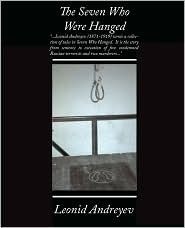
I read this novella in an anthology of horror and ghost stories and would normally include it in my Countdown to Halloween series, but it struck me as misplaced. It lacks a supernatural element, and the horror is from human beings. Only two of the condemned are criminals in the traditional sense. The rest are doing their jobs or trying to improve the world, albeit by violence. One person’s freedom fighter is another’s terrorist.
Plot:
The police inform the Minister that they have uncovered a plot to assassinate him. They are careful not to give him too many details because he’s “predisposed to apoplexy,” that is, likely to have a stroke if he’s too upset. However, they do tell him the terrorists planned the attack for one o’clock the next day.
The Minister is spirited away to safety, where he cannot sleep and obsesses about the plot to kill at one o’clock. So little time to live! He is alone. He first calls the police, “Brave fellows! Brave fellows!” then calls them “Fools! Fools!” He grows fearful. The last the reader knows of the Minister is that he rings the alarm to summon help and collapses.
The police arrest three men and a woman in front of the steps of the Minister’s residence. The assailants carry bombs, revolvers, and “infernal machines” (never described beyond that term). The police later arrest another woman at her home, where the weapons were manufactured, and the conspiracy was planned. The eldest of the arrested men is twenty-eight, and the younger of the women is nineteen.
They are tried quickly and in secret, as was the custom of the time. “In everything that happened,” the author tells the reader, “they manifested that distant and attenuated curiosity peculiar to people seriously ill or possessed by a single all-powerful idea.”
They are all sentenced to be hanged.
The condemned are:
1) Sergey Golovin, a former officer, son of a retired colonel. “He was very young, with broad shoulders, and so robust that neither the prison or the expectation of certain death had been able to dim the color of his cheeks or the expression of happy innocence in his blue eyes. Throughout the trial he twisted his thick blond beard, to which he had not yet become accustomed, and gazed steadily at the window, knitting his brows.”
He follows the eighteen exercises of the Müller System.
2) An unknown young girl surnamed Musya. She is younger than Golovin, but “seemed his elder because of the severity, the gravity, of her proud and loyal eyes.”
“The judges pitied Sergey Golovin and hated Musya.”
3) An unknown man surnamed Werner. Of him, the narrator says, “If one can bolt a face as one bolts a heavy door, the unknown had bolted his face as if it were a door of iron. He gazed steadily at the floor, and it was impossible to tell where he was calm or deeply moved, whether he was thinking of something or listening to the testimony of the policemen.”
4) Vasily Kashiri: The narrator says, “a frightful moral struggle was going on between the intolerable terror of death and the desperate desire to subdue this fear and conceal it from the judges.”
5) Tanya Kovalchuk “sheltered her comrades with a maternal look. She was still very young; her cheeks seemed as highly colored as those of Sergey Golovin; and yet she seemed to be the mother of all the accused, so full of tender anxiety and infinite love were her looks, her smile, her fear. The progress of the trial did not interest her. She listened to her comrades simply to see if their voices trembled, if they were afraid, if they needed water.”
The two additional condemned are non-political. A fortnight earlier, Ivan Yanson, a peasant farmhand, stabbed his master and tried to rape the master’s wife. He is Estonian and doesn’t speak Russian well. He keeps repeating, “She said I must hang,” but I must not be hanged,” and “I don’t want to be hanged.”
The last person is Michael Goloubetz, known as Michka the Tzigane (Hungarian gypsy), a peasant charged with robbery and the assassination of three people. He is a self-proclaimed brigand.
The sentence is carried out within a few days. Devastated family members show up to say their final goodbyes before the prisoners are removed by train to a remote location for the execution.
Thoughts:
Over the days in prison, each person undergoes a transformation while dealing with their imminent death. It is here that Andreyev’s writing approaches the metaphysical. There is no single answer. Each person faces death from a unique perspective.
Of Musya, the reader is told:
Musya was happy
“Is this really death? My God, how beautiful it is! Or is it life? I do not know! I am going to see and hear…”
From the first day of her imprisonment she had been a prey to hallucinations. She had a very musical ear; her sense of hearing, sharpened by the silence, gathered in the slightest echoes of life; the footsteps of the sentinels in the corridor, the striking of the clock; the whispering of the wind over the zinc roof, the creaking of a lantern, all blended for her in a vast and mysterious symphony.
Unfortunately, what she hears at one point is nothing more than a military marching band making its way past the prison.
These dreams and/or visions brought to my mind Perpetua’s Passion, the account of a 3rd-century CE Roman Christian woman condemned to die by wild beast for refusing to renounce Christianity. She, too, had vivid dreams in prison in the nights leading up to her death. The dreams are often seen by people who know these things as Perpetua preparing herself for death.
The writing is not without humor. Sergey Golovin has always excelled at everything he’s done in life: boating, marksmanship, and so on. He’s resolved to die well. His one fault is that he’s a wretched singer and doesn’t know it. He even butchers revolutionary anthems.
In his introduction to the 1909 English translation, Andreyev wrote:
My task was to point out the horror and the iniquity of capital punishment under any circumstances. The horror of capital punishment is great when it falls to the lot of courageous and honest people whose only guilt is their excess of love and the sense of righteousness—in such instances, conscience revolts. But the rope is still more horrible when it forms the noose around the necks of weak and ignorant people.
This BBC article claims that this story started the First World War by inspiring the assassination of Archduke Ferdinand and his wife in 1914. The ringleader of the anarchists who carried out the assassination, Danilo Ilić, read the book, translated it, and wrote about it. He was hanged in 1915. The gunman, Gavrilo Princip, was considered too young to be executed and later died in prison of complications of tuberculosis and malnutrition.
I doubt the Great War could have been avoided merely if Ilić had read the story more carefully, but it is a scary thought.
All that aside, the depictions of people facing death without regret make this a piece of writing worth reading. It is moving. Even the most violent and the thickest skulls change. They are not angels, but they remain human. I think that is the author’s message.
This story can be read here:
This story can be listened to here: (3:37:14)
Bio: Author Leonid Andreyev (1871-1919) was born in the city of Orel, located about 229 miles (368 km) outside Moscow. While working as a police court reporter, he published a few poems that came to the attention of the Russian literary giant Maxim Gorky, who encouraged him to pursue literature. Among Andreyev’s best-known works are the 1908 novella The Seven Who Were Hanged and the 1915 play He Who Gets Slapped. His horror short story works, published in translation in Weird Tales, influenced H. P. Lovecraft and Robert E. Howard, the creator of Conan the Barbarian.
Title: The Seven That Were Hanged
Author: Leonid Andreyev (1871-1919)
First published: (Russian) 1908; first English translation 1909
Length: novella
 Reviews of Old and New Stories. Mostly Old
It sounds like a very poignant and thought provoking book with some weaknesses. You wrote a very detailed and very helpful review.
Thanks for your kind words. It is indeed poignant. Who’d have thought a reader would be cheering for assassins?