Review of “Empire of the Ants” (1977)

Now that I can eat pizza again and stay awake for a while, we resumed our Saturday night pizza and bad movie fiesta. This one was silly.

Plot:

Somewhere off the Florida coast, figures in red hazard suits dump barrels marked “Danger Radioactive Waste” and “Do Not Open” into the water. At least one barrel washes ashore near a rickety pier. Ants gather around, licking up some mercury- (and special effects-) looking substance oozing from the barrel.

 Marilyn Fryser (Joan Collins), a sleazy real-estate developer, is gathering a tour of prospective buyers for a resort she’s building in the swamp, Dreamland Shores. Her salesman and present main squeeze is Charlie Pearson (Edward Power). Aboard the yacht that will take the marks—prospective buyers— is the captain, steely-eyed Dan Stokely (Robert Lansing).

Charlie and Marilyn take the group of eight or nine people on a two-hour tram tour of the resort that-will-be. (“The pool will be here. The tennis courts will be here…”). An alternative screen shows a black grid with a series of circles displaying the tram’s activities, like a bank of television sets in a store.

…Someone is watching our heroes. Someone who clicks…

When the group stops for a picnic under a tent, Thomas and Mary Lawson (Jack Kosslyn and Ilse Earl) wander off. Thomas is looking for something to prove this is all a scam. He finds PVC piping near a fire hydrant that he can pull out of the ground with his bare hands. “This isn’t connected to anything!” Thomas tells his wife.

“What’s that sound?” she asks.

Alas! They never make it back to the picnic.

Thoughts:

The movie bears little resemblance to the 1905 H. G. Wells short story of the same name that inspired it, outside of murderous ants. It’s hard to watch this and not see a little debt to the superior Them! (1954), a movie also involving mutated-by-radiation giant ants who like sugar but don’t mind munching people.

I was a little surprised at the PG rating. The film is quite bloody. I’d be careful about showing it to kidlets. There is no sex. One guy forces his attention on a young lady and gets kneed in the groin for his bad manners.

My biggest gripe with the film is that the characters are plot devices rather than people. The dialogue is as fresh as a carp left the counter for five days. Marilyn, for example, praises Charlie’s prowess “in the sack” within hearing of steely-eyed Captain Dan. The two biggest sleazebags abandon their respective partners to their fates with the ants.

Some minor gripes involve pacing: How long after eating the radioactive quicksilver do the ants grow to the size of milk trucks? The film doesn’t specify, but it implies all it takes is a weekend bender.

The special effects aren’t bad for the time. The ants are clearly crawling across pictures, which leads to some odd visuals at times. Less-than-perfect special effects don’t bother me.

An odd twist is the super-ants can control the minds of humans. The townsfolk must return once a week for their dose of mind-control spray. This leads one helpful farmwife to warn our heroes who have just escaped the horror of ants in the swamp, “Don’t let them take you to the sugar refinery.”

This really was a mixed bag for me. It could have been a much better film had it bothered to have more than stick figures for characters. The idea of psychological threat following prolonged harrowing physical danger is a solid one. Just when you thought it was safe—

However, if I laughed, it was more in delight than derision. Yes, it was hokey. Yes, it was silly. But it was a lot of fun. As for a recommendation—you won’t be disappointed if you go in with few expectations.

This movie can be watched (with a LOT of commercials) here on Tubi.

Title: Empire of the Ants (1977)

Directed by
Bert I. Gordon

Writing Credits
H.G. Wells…(story)
Jack Turley…(screenplay)
Bert I. Gordon…(screen story)

Cast (in credits order)
Joan Collins…Marilyn Fryser
Robert Lansing…Dan Stokely
John David Carson…Joe Morrison
Albert Salmi…Sheriff Art Kincade
Jacqueline Scott…Margaret Ellis

Released: 1977
Length: 1 hour, 29 minutes
Rated: PG

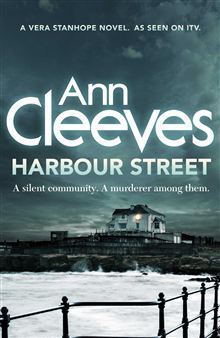
Review of “The Little Grey Men” by B.B.

Image from Goodreads

The Stuff:

This is a children’s book written and illustrated by a British naturalist. It features four gnomes, reputed to be the last in Britain. They regard themselves as brothers and live under a tree root by Oak Pool. Cloudberry, the most adventurous of the four, has left to find the source of the Folly Stream, which they live by. He has not yet returned.

The other three gnomes, Baldmoney, Sneezewort, and Dodder, begin to worry about him. Baldmoney and Sneezewort build a boat to work their way upstream to find him. Dodder, the eldest and most stubborn, refuses to join them.

Baldmoney and Sneezewort are not deterred. They leave in their boat, Dragonfly. Dodder becomes lonely in a day or two and follows them, only to find the wreckage of the Dragonfly by Moss Mill and no sign of Baldmoney or Sneezewort.

Thoughts:

My friend Tracy gave this to me, saying neither she nor her adult daughters could finish it. I can see why; saccharine oozes from its pages. It’s a children’s book from a bygone era. I’ve finished it. I don’t know that I would give it to a child, but not because of the saccharine.

One of the most enjoyable things about the book is the depiction of the natural settings. The author’s love of being in the wild appears on every page. It took me a bit to realize the names of the gnomes are also names of flowers.

The book even veers into a bit of nature worship. Pan is the overseer of the animals. The gnomes speak of him as a power or deity. The gnomes and (most of) the animals are friends, but they have nothing to do with humans if they can avoid it.

One of the things that never made sense to me was renaming the animals. Rabbits are Bub’ms, for example. A fox is a wood dog. The wood dog is an enemy—Dodder lost one leg to a wood dog as a young gnome.

Despite warnings of danger, our heroes stop at Crow Wood. Here, the gamekeeper is a vicious human named Giant Grum. So efficient is he at keeping “vermin” down that there are no songbirds in Crow Wood. He’s killed them all. He shoots Otter in the Folly, who has done nothing more than help tow the gnomes’ boat. The gnomes are horrified, but it gets worse. They later find Otter’s carcass nailed on a “gibbet” along with the remains of several other animals and birds.

Dodder vows revenge and, of course, gets it.

In 1942, when the book appeared, more people lived on farms and were familiar with slaughtering animals for food and killing pest animals. In this book, Otter was a character, a friend, and a decent person. He was only in Crow Woods and not with his wife and children because he was helping the gnomes. He’s killed in cold blood, and his body hung up to dry like a game trophy. ICK

The author illustrated his book with black-and-white drawings using his own name. These are a nice touch, but some are hard to make out. Or maybe it’s just my old eyes.

Dodder begins his lonely journey up the Folly Brook

The book won the 1943 Carnegie Medal for children’s literature. Reading through places like Goodreads, I find that many people have happy memories of reading this book as children.

I enjoyed the adventure and the portrayal of the outdoors. Still, many things make me hesitate about recommending this book, either for its intended audience of children or for adults who need a break—and I’m not talking about the gnomes smoking tobacco.

There are one or two sequels (depending on who’s counting): Down the Bright Stream and The Forest of Boland Light Railway.

Title: The Little Grey Men
Author: B.B. (pseudonym for Denys James Watkins-Pitchford) (1905-1990)
First published: 1942


Adventures in Breathing

Image by OpenClipart-Vectors from Pixabay

About a week ago, my husband woke me up and said, “You may as well get dressed. We’re going to the emergency room. You’re breathing like you do when you have pneumonia.”

I don’t recall the time. Perhaps midnight or shortly thereafter. I was, indeed, having trouble catching my breath. I’ve had pneumonia maybe eight or nine times since I was twenty and seem to come down with it every year or two recently. I was tired and wanted to sleep. I sure as hell didn’t want to wait around a cold emergency room when I could be home sleeping.

“I’ll go in the morning,” I told him. Besides, trips to the emergency room cost upwards of $500. [Insert argument for universal coverage here.] I didn’t want to spend that much money if I didn’t have to—especially on something so dreary.

“No, you’ll go now.”

My dearly beloved seldom insists on anything. So, we got up. I fed the cat (who never gets fed at home). We played with the happy little guy for a while. He must have thought this was a new adventure.

In the meantime, I heard my lungs whistling. Breathing had become a competitive sport. My lips and my mouth were dry. I was moving even slower than usual.

At the hospital entrance, the security guard (bless him) asked me if I wanted a wheelchair. I declined. I apologized for forgetting a mask—which I intended to bring. He held out the box and said, “Take as many as you want.” He further asked if I felt like I would vomit. I thanked him for his concern, but no, that wasn’t an issue—happily.

When I later discussed the encounter with my husband, he told me, “You looked pretty bad.”

Inside, a nurse drew what seemed like a pint of blood but was undoubtedly a lot less.

The emergency room doctor asked questions like whether I had pain in my left arm or chest pains. No. Did I smoke? Had I ever smoked? No, and no. Of all the bad habits I have, that’s one I missed.

(I reflected on the recent loss of a relative to lung cancer days before his sixty-second birthday. He’d smoked two packs a day for years.)

She ordered a chest x-ray, a CAT scan with a vile-tasting contrast dye to drink, and an EKG. As foggy as my mind was at the moment, it could pick up on the theme. I tried not to panic. I mean, this was only my old friend pneumonia, right? This episode wasn’t anything life-altering like a heart attack, right…?

At the end of the night, the doctor told me that I had an elevated white cell count, so there was an infection somewhere, but my heart and lungs looked fine, and I wasn’t running a fever. She prescribed a couple of antibiotics, then said, “How are you feeling? I’m on the fence about you. I can send you home or keep you.”

Oh, for the love of god, send me home! “My biggest complaint right now is that I’m tired. I just want to go home and sleep.”

She could have admitted me but sent me home. I slept. My dearly beloved picked up my drugs while I slept.

The emergency room doctor called early the next morning to say that there had been an “overread” (whatever that is) of the CAT scan and that it looked like pneumonia after all. I wheezed a sigh of relief. At least I was in familiar territory.

Review of “A Fever in the Heartland” by Timothy Egan

from goodreads

The Stuff:

This is a nonfiction book about the resurgence of the Ku Klux Klan in the 1920s in the Midwest. Their traditional center of power was the South, the states of the former Confederacy. Most of the events it covers transpire from roughly 1921 to 1925, reflecting a rapid rise and a even more rapid fall.

In Indiana, a man named D.C. Stephenson rode the groundswell of the Klan to become Grand Wizard of the Indiana Klan. (With a title like that, who wouldn’t want to have the job?) The Grand Wizard also took a cut from every initiation fee paid and every uniform sold, making him an exceptionally wealthy man.

“I did not sell the Klan on hatreds,” the author quotes Stephenson. “I sold it on Americanism.” Yet those who joined the Klan swore an oath that one race and one religion (theirs, of course) were superior to all others.

Stephenson was hardly a benevolent dictator but had a habit of brutalizing his various wives, intimate partners, and any woman around him. He was the most powerful man in Indiana. Who was going to stop him?

Madge Oberholtzer had been an educator and was working as an aide to Stephenson. She agreed to ghostwrite a book on nutrition for him, which he would then sell to the Indiana school system whether they needed it or not.

One night, twenty-eight-year-old Madge returned to her parents’ house from a date to find multiple messages from Stephenson. The messages demanded she meet him at his hotel room that night for consultations about the book. Yeah, about the book.

Thoughts:

The Klan of the 1920s differed from the Klan of Reconstruction in several ways. First, it was more political, trying to win over people by insinuating itself into places of power rather than simple brute terrorism toward black citizens—though, of course, they didn’t abandon terrorism. They also branched out in its targets of hate. Not content to oppress only the emancipated slaves and their descendants, they focused their hatred on immigrants (those who talk funny), as well as those who prayed differently—the Jews and the Roman Catholics. Perhaps one could describe it as a fascist snob social club with an enforcer wing. There was a woman’s auxiliary and (really) a children’s brigade, the Ku Klux Kiddies.

Though the political maneuvering of the Klan has parallels to the rise of the Nazi party, the author writes little of the latter. He does mention Nazi Germany defended its 1936 eugenics law by using the U.S. as a role model. (p. 347) Placing Klansmen in positions of political power (e.g., the governor of Indiana was a Klansman) to push the Klan’s agenda of bigotry, enrich the Klan elite and allow them to flout laws such as Prohibition has echoes of the worst accusations against a certain political party active at present, yet Egan never alludes to the present-day turmoil.

Ferinstance, Clifford Ford, governor of Georgia, told a Klan rally in 1924 the U.S. should build ”a wall of steel, a wall as high as heaven” to keep out those pesky immigrants. Yeah, no new thing under the sun.

Egan does not pretend to be neutral, nor does he need to, IMseldomHO. Without apology, he describes the message of the Klan as one of hate, its members as “ghost-sheeted marchers” and the organization itself as “the hooded order.”

I can easily recommend Egan’s recounting of the ugly slice of history, albeit with the warning that this is not a happy read. The worst did not come to past—and no one destroyed half the continent—but it is a reminder that we dodged a bullet.

Bio: Timothy Egan is an American journalist and author of ten books, most notable of which is The Worst Hard Times (2006), an oral history of survivors of the Dust Bowl of the Great Depression.


Title: A Fever in the Heartland: The Ku Klux Klan’s Plot to Take Over America, and the Woman Who Stopped Them
Author: Timothy Egan
First published: 2023

Review of “The Willows” by Algernon Blackwood

Image by ttktmn0 from Pixabay

31) “The Willows” by Algernon Blackwood


Plot:

The narrator and his friend, known only as the Swede, take a canoe trip along the Danube. They plan to ride the river from its source in the Black Forest to the Black Sea. The narrator and the Swede have made similar trips in the past, but as the narrator tells the reader, “but the Danube, more than any other river I knew, impressed us from the very beginning with its aliveness.”

Things go well until after they pass “Pressburg” (Hungarian, Poszóny, the narrator helpfully tells the reader)—that is, present-day Bratislava in Slovakia—into Hungary. A Hungarian officer warns them against continuing. With the river in flood, they may take a side channel that dries up and leaves them in the middle of nowhere. With no farms or towns for miles, they could very well starve. They buy extra provisions but don’t worry about the flooded river. They go ahead.

The river flattens out, even in the flood stage where it is now, creating and destroying little islands in its wake.

The wind picks up, and the two find an island to camp on. The island is about an acre in size, with stunted willows growing around it. They have plenty of provisions and set their tent up in a broad depression, out of the worst of the wind.

While they gather driftwood for firewood (“willow bushes drop no branches,” the narrator informs the reader), they glimpse what appears to be a drowned man rolling in the river’s current. After it dives, they decide it was an otter—a big otter.

Thoughts:

From the beginning, Blackwood describes the Danube in terms of a living being. He depicts canoeing on it as being carried on the river’s shoulders. It plays with them roughly sometimes but remains friendly (until it doesn’t). They hear it singing to the moon at night.

The description is lovely, and the writing is enchanting, creating a palpable atmosphere. When things go south, it is all the more intense. The wind howls all night.

Having camped in wind strong enough I opened my eyes to find the tent’s walls a few inches from my nose, I was right there with the narrator and the Swede. How did they manage to eat? The wind blew my plate over. We had to sit in the car, which these guys didn’t have.

Even with the wind howling, the narrator hears things—the patter of little feet and something dropping onto the tent. He sees things—smoke or something rising from the willows. The Swede sleeps undisturbed.

In the morning, they find their canoe has been slashed. An oar is missing, along with some provisions—even though they are alone on the island. And there is a faint sound like a gong.

This is creepy and atmospheric. It takes a while, and not everything makes sense, but this is a nice scary tale when you’re alone with a cup of hot tea and the weather is cold and maybe stormy.

This story can be read here.

This story can be listened to here.

Bio: Algernon Blackwood (1869-1951) was an English writer, playwright, journalist, and broadcaster. Much of his fiction deals with ghosts and the supernatural. He wrote approximately 200 short stories, plus essays, plays, novels, and some children’s works. During WWI, he volunteered as an ambulance driver but served in Switzerland as a spy.

His interests in Eastern philosophy and religion, as well as occult studies, influenced his writing. H. P. Lovecraft was a fan. Blackwood influenced many other writers, including William Hope Hodgson and Ramsey Campbell.

Among his best-known writing are the two novellas, “The Wendigo” and “The Willows.”


Title: “The Willows”
Author: Algernon Blackwood (1869-1951)
First published: The Listener and Other Stories, 1907


Note: Wow, what a trip theses reviews have been—a lot of work but a lot of fun. I’m glad they’re done. I hope people have enjoyed them or have found a good read or two. Happy Halloween!

Review of “The White People” by Arthur Machen Halloween Countdown

Image by ttktmn0 from Pixabay

30) “The White People” by Arthur Machen


Plot:

This novelette opens with a debate between two friends, Ambrose and Cotgrave, on the nature of sin. According to Ambrose, true Sin is rare and has more in common with the sanctified than the mundane.

A murder is a terrible thing, but it is not true Sin. The murderer lacks knowledge, training, or table manners, perhaps—that leads him to murder. He should be locked up to keep society safe from his knife (were he writing in the present in the United States, he might add something about an “assault-style rifle”) in the same way society keeps tigers away from their midst. No can regard the tiger as a sinner, however.

True Sin is like sainthood in that both seek to trespass boundaries. Both seek a sort of ecstasy.

To illustrate his point, he gives his friend a diary called The Green Book, written by a young girl he knew.

In the beginning, the girl writes:

“I wanted a book like this, so I took it to write in. It is full of secrets. I have a great many other books of secrets I have written, hidden in a safe place, and I am going to write here many of the old secrets and some new ones; but there are some I shall not put down at all. I must not write down the real names of the days and months which I found out a year ago, nor the way to make the Aklo letters, or the Chian language, or the great beautiful Circles, nor the Mao Games, nor the chief songs. I may write something about all these things but not the way to do them, for peculiar reasons. And I must not say who the Nymphs are, or the Dôls, or Jeelo, or what voolas mean.”

One night, she runs into the woods and finds a special place. The passage is atmospheric, laden with pagan sights, sounds, and symbols. The girl is innocent of any understanding of wrongdoing. She understands this only in terms of stories her nurse has told her. Later, when her nurse shows her how to make clay figures, the reader understands these are intended to curse people, but the girl does not. She’s only obeying what her nurse has told her.

The Epilogue has the two friends digesting what the Green Book has to say.

Thoughts:

The white people of the title refers to beings the girl of the green book sees from her earliest years around her bed. She perceives no threat. Nor are they friends per so. They are merely there.

The girl chronicles her own seduction into paganism/witchcraft. On some level, she’s aware that what she’s doing is “wrong” because she has to keep everything secret, not even defining the occult words. Other secrets she refuses to commit to writing. However, on the surface, she sees nothing wrong. She sees her initiation into this otherworldly realm as exciting, born from the stories her nurse tells her. And, well, she’s enjoying herself.

When the girl puts her tired feet in water, the ripples “kiss” them. She lies on the grass and tells herself “terrible, delicious” things. She watches rites, including a dance between a white woman and a white man.* (hmmm… What could be going on there?)

So this is capital-S Sin? A girl going out in the woods and enjoying herself and her body without benefit of clergy? What is this world coming to?

Interestingly enough, the two friends in their epilogue do not blame the girl for the catastrophe that befalls her but blame her father, who ignored her and left her upbringing to her nurse.

One of the things that annoyed me about this story was the formatting. The Green Book section appears as a block text without paragraphs except for a few rhymes. At first, I thought this was an artifact with my Kindle, but even on Project Gutenberg, it’s page after page of black. My poor old eyes went bonkers without relief.

Plenty of people have praised this story—Lovecraft, for one. I think the device of an innocent describing her own seduction without a hint of regret is one reason. It is clever and engaging. It is novel in that the seducer or a third party is silent. The party herself is speaking.

If it weren’t for the blinding brick formatting and the two friends blathering on interminably in the beginning and end, I would have enjoyed this more, but it is certainly worth the read.


The story can be read here.

The story can be listened to here.


*The implication speaks to otherworldly creatures and has little to do with race per se.


Title: The White People
Author: Arthur Machen (1863-1947)
First published: First published in Horlick’s Magazine, January 1904.

Review of “The Upper Berth” by F. Marion Crawford Halloween Countdown

Image by ttktmn0 from Pixabay

29) The Upper Berth by F. Marion Crawford


Plot:

This is a club story, that is, framed as a tale told by a member of a gentlemen’s club. (In the nineteenth century, it meant a private place where men hung out, smoked and drank. It didn’t mean the present-day sense where men hang out smoke, drink and watch women dance and take their clothes off.) The stories can relate accounts of adventure, derring-do, or, as in the present example, old-fashioned yarns of tangles with the supernatural.

According to the narrator, Brisbane is a strong man, even stronger than he looks. He breaks walnuts with his bare hands. He’s about thirty-five years old. “His head is small, his hair is thin, his eyes are blue, his nose is large, he has a small moustache, and a square jaw.”

Much to the disbelief of his fellows, he tells them he has seen a ghost. And once he’s said this, the party is back on.

His business takes him back and forth across the Atlantic often. The Kamtschatka was one of his favorite ships, but no longer. Members of the crew know him on sight. When he announces his cabin number—105, lower berth—the steward reacts in such a way that Brisbane wonders if he was “the better for a glass.”

“I was wrong,” he tells his fellows, “and did the man injustice.”

He turns in early and finds, to his disappointment, that he has a roommate. A portmanteau, like his own, lies in the opposite corner. The upper berth has a rug and umbrella strewn across it.

When his roomie arrives, Brisbane’s in bed. He instantly looks down his nose at the stranger he watches through the slit in his curtains and declines to make his acquaintance. Sometime in the night, the roomie jumps from his berth and runs out of the cabin, leaving the door open. Annoyed, Brisbane gets up to shut it, composing a sternly worded lecture. He wakes again, feeling cold. The cabin smells of seawater. He hears someone (his roomie? Maaaaybe.) turning and perhaps groaning above him, ascribing the whole business to seasickness.

In the morning, he wakes alone in the room. News comes of a missing man.

Thoughts:

Brisbane is a skeptic. When he hears rumors that several of the former passengers in his cabin taking their lives by jumping overboard in the middle of the night, he brushes it off as a set of singular tragedies. It certainly doesn’t mean the ship is haunted because thar ain’t no such things as ghosts, ya know.

That thing with the porthole always being open? It’s the fault of an inattentive steward.

Despite receiving offers to stay in another cabin, he likes the idea that he no longer has to share and stays put. Unfortunately, he finds he’s not entirely alone.

This is creepy, with warnings from the steward and a doctor Brisbane meets during the day.

“It’s just what I call fuggly weather,” the doctor says at one point.

It’s safe to say the word “fuggly” probably had a different meaning in 1886.

There is also some humor. In the beginning, the narrator pokes fun at some of the club members’ attempts at conversation. Among them is Mr. Tompkins, of Boston, who “explained at elaborate length those working principles, by the due and careful maintenance of which the Atchison, Topeka, and Santa Fé Railroad not only extended its territory, increased its departmental influence, and transported live stock without starving them to death before the day of actual delivery, but, also, had for years succeeded in deceiving those passengers who bought its tickets into the fallacious belief that the corporation aforesaid was really able to transport human life without destroying it.”

This was a creepy little tale. I liked it.

The story can be read here.

An audio version is available here:

Bio:  F. Marion Crawford (1854-1909) was born in Italy to American parents. His father was the sculptor Thomas Gibson Crawford, who died while the author was a toddler. Crawford’s first novel, Mr. Issacs (1882), depicted Anglo-Indian life with an added touch of Theosophy, perhaps reflecting his time in India studying Sanskrit. It was successful, though today, he is best known for his story reviewed above.

Title: “The Upper Berth”
Author: F. Marion Crawford (1854-1909)
First published: Unwin’s Annual for 1886, The Broken Shaft: Tales in Mid-Ocean, 1885

Review of “The Tell-Tale Heart” by Edgar Allen Poe Halloween Countdown

Image by ttktmn0 from Pixabay

28) The Tell-Tale Heart by Edgar Allen Poe

Plot:

The narrator confesses to being nervous by nature, but he is not insane. His nervousness has increased his senses, not dulled them. His hearing is especially keen.

What first led him to do what he did?  He doesn’t know. He loved the old man. The old man never insulted him. He didn’t desire his gold, But his eye—it was like a vulture’s eye. Whenever it fell on the narrator, his blood ran cold.

The narrator asks his audience to see how carefully he planned and executed his plan. Could a madman be so careful?

Thoughts:

This short tale is Poe at his best. The gore is minimal, but the sense of dread and the atmospheric horror ratchet up until the final lines. The irony is exquisite; the narrator denies he is insane. Look how carefully he planned his murder and how in control of himself he is as he relates the events. At the same time, he shows the reader in words and deeds that he is deeply disturbed.

I read this as not involving the supernatural at all. The tell-tale heart the narrator hears is not that of the old man he had just killed but his own, beating fast in reaction to stress. Of course, it is still a horror story because an innocent man has been murdered in cold blood. Poe tells the reader of the victim’s terror in his last moments.

I first read this story when I was about eleven (so long ago, the story was hot off the press…). It scared the bejesus out of me, though I couldn’t tell you why, other than maybe I was reacting to the increase in tension.

The story is remarkably compact. Everything leads up to the climax at the end. For a good horror read, it’s hard to beat.

This story can be read here.

The story can be listened to here, read by Christopher Lee (14:32)

Bio: Edgar Allen Poe (1809-1849) wrote poetry and what some consider the first modern detective story, “The Murders in the Rue Morgue.” The Rue Morgue story detective, C. Auguste Dupin, was an inspiration for Conan Doyle’s Sherlock Holmes. The work that made Poe well-known in his time was the poem “The Raven.” Nevertheless, he struggled financially for most of his life and also struggled with alcohol. He died in Baltimore in a manner that still is not understood. According to the Poe Museum, there are more than twenty-six published theories.


Title: “The Tell-Tale Heart”
Author: Edgar Allen Poe (1809-1849)
First published: The Pioneer, January 1843

Review of “The Striding Place” by Gertrude Atherton Halloween Countdown

Image by ttktmn0 from Pixabay

27) The Striding Place by Gertrude Atherton

Plot:

Weigall, “continental and detached,” has tired of grouse shooting. He finds the company at his host’s estate boring and the women “a dull lot.” What’s really bothering him is that his friend, Wyatt Gifford, a guest on a neighboring estate, has been missing for two days.

This angers Weigall more than anything else. Gifford likes to pull pranks. The two friends met in college. There, a mutual friend went mad and had to be confined to a hospital, where he later died. The mutual friend’s experience inspired Weigall and Gifford to discuss the nature and destiny of the soul.

Weigall eventually goes out to look for his friend, unadvisedly at night and in the rain. He comes to a part of the River Wharfe known as the Strid. Here, the river narrows, almost to the point where an adventurous person can leap across it. The rocky, slippery banks are undercut, trapping air-breathing animals beneath them, making any leaping quite dangerous.

It all gives Weigall the willies. He’s about to turn away when he sees something white in the water—a hand thrashing. At the wrists are cufflinks Weigall recognizes as belonging to his friend Gifford.

Thoughts:

This is a sad, spooky little tale. The shock ending contrasts nicely with the bored young man in the beginning.

Atherton gives the reader some nice atmospheric build-up along the way—the woods at night are mysterious and conceal the daylit world—the danger Weigall experiences of slipping on the wet rocks around the river’s edge—the revulsion he feels at the slimy water.

The Strid is a real place along the River Wharfe and just as dangerous as the story makes it out to be. It is in a scenic walking area.

The dangers have been known for centuries. Stories of people drowning date from medieval times.

I can recommend this story as a quiet little horror story.

The story can be read here.

The story can be listened to here via Librivox:

Bio: Gertrude Atherton (1857-1948) was born in San Francisco, California. On her mother’s side, she was a descendant of Benjamin Franklin. She published about 50 books over her lifetime, plus short stories and articles. Her first fantasy novel was What Dreams May Come: A Romance (1888) under the pseudonym Frank Lin. In addition to supernatural tales, she published novels and what might now be considered creative nonfiction about her family. The latter scandalized her husband and mother-in-law when they realized she was the anonymous author.


Title: “The Striding Place”
Author: Gertrude Atherton (1857-1948)
First published: First published as “The Twins” in The Speaker, June 20, 1896

Review of “The Shadows on the Wall” by Mary E. Wilkins Halloween Countdown

Image by ttktmn0 from Pixabay

26) The Shadows on the Wall by Mary E. Wilkins Freeman

Plot:

“Henry had words with Edward in the study the night before Edward died,” Caroline Glynn tells her sisters.

Caroline and her two sisters, Rebecca Ann and Mrs. Stephen Brigham, are preparing for the funeral of their youngest brother, Edward, who lies in the house. They regret their brothers’ argument, but of course, Henry couldn’t have known that Edward was so near his end.

Rebecca Ann is the youngest of the sisters and weeps constantly. It becomes clear she is also terrified of something. Caroline, the eldest, is severe. She is writing letters, so neighbors have notice of the funeral. Mrs. Stephen Brigham (the author eventually gets around to calling her Emma) is sewing her funeral dress. “I can’t go to the funeral without it.”

As daylight wanes, they ask Rebecca Ann to get them a lamp. She hesitates, then puts it in a place that won’t do them much good. After she finally sets the lamp down in a satisfactory place, she runs from the room.

Emma looks up from her sewing to see an odd shadow on the wall, where one wouldn’t expect it. And it looks just like—but no, that’s impossible. When she asks Caroline if she sees the shadow, Caroline says, “I have eyes, don’t I?”

Henry thought Edward was freeloading, staying in the house without paying rent, although their parents left the house to all of them.

Rebecca Ann recounts part of the argument between the brothers she overheard. “[Edward said] that he would stay here as long as he lived and afterward, too, if he was of a mind to, and he would like to see Henry get him out.”

The siblings talk on but ignore a more sinister recollection of Rebecca Ann’s—something that might account for her tears and terror.

Thoughts:

A quick pass through this story will not serve the reader well. There are a lot of subtle and, frankly, tedious things that hide the true horror of this piece. The shadow on the wall does not move or threaten. It reminds. It haunts, and it does not look away.

The sisters know what occurred but will not acknowledge it. It’s too monstrous.

All this makes no sense until the end of the story, which is hard to pin down.

The story inspired a Night Gallery segment, “Certain Shadows on the Wall.”

The story can be read here:

The story can be listened to here via Librivox:

Bio: Mary E. Wilkins (1852-1930) began writing children’s literature as a teenager. Most of her two hundred stories for adults are realistic, such as “A New England Nun.” She also wrote ghost and supernatural stories.


Title: “The Shadows on the Wall”
Author: Mary E. Wilkins (1852-1930)
First published: Everybody’s Magazine, March 1903