
Plot:
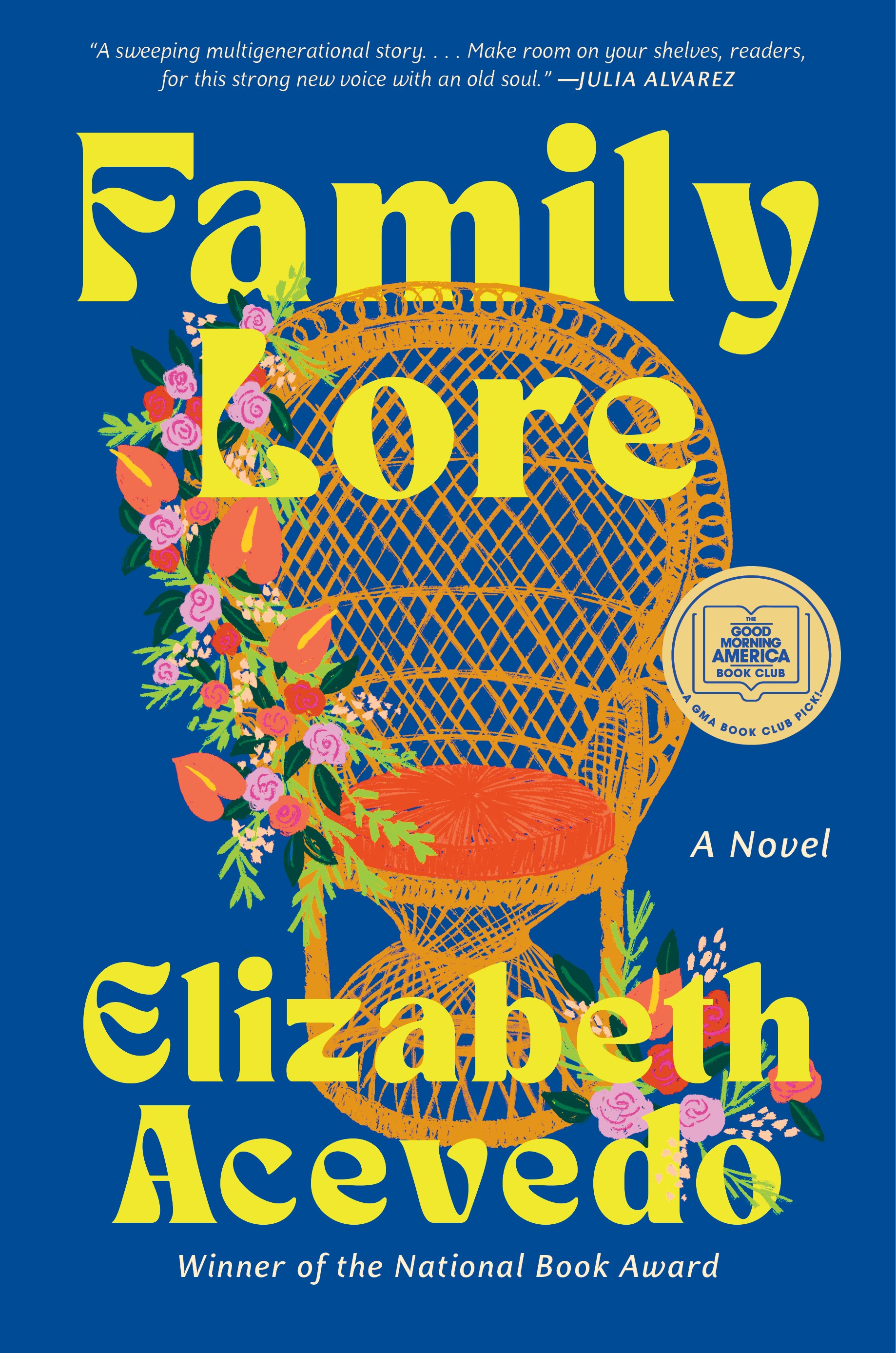
Widowed and about 70, Flor Marte asks her family for a living wake so she can enjoy it while she’s still here. She’ll get to see everyone again, especially her three sisters, Matilde, Pastora, and Camila. They are originally from the countryside of the Dominican Republic and immigrated to the United States at different times.
Each woman was born with a gift. Flor predicts death. She dreams her teeth are smashed. Pastora can tell if someone is telling the truth. Ona, Flor’s anthropologist daughter, has an “alpha vagina.”
When Flor asks for the living wake, everyone wonders if she is well. Has she had a dream? She says very little. She asks for this favor.
The action of the book starts six weeks before Flor’s wake, with most of it concentrated in the few days before. However, flashbacks tell the stories of the sisters and their daughters.
For example, the reader learns of the courtship and wedding of Mati and her wandering husband. His constant philandering leads to consequences that reach into the present, forcing Mati to make a choice she’s been avoiding for decades.
Thoughts:
The anthropologist Ona, interviewing family members for a project, provides the framework for the book. A couple of short chapters appear in question-and-answer form. In more places, comments from Ona occur as insets, like notes. The narrative moves back and forth between the past and the present.
This sounds more complicated than it is. What emerges is a mosaic of an immigrant family story, remembering the home country while living in the new one.
Author Acevedo provides a list of characters at the beginning of the book, with descriptions of how they’re related and their supernatural gifts. This is helpful but also shows how many characters the reader has to contend with. I had to refer to the list more than once (“Whose daughter is Yadi again?”)
There is a bit of untranslated Spanish throughout the book. I was proud of myself when I read a complete sentence and understood it. Most of the meanings are clear from context, however. I can understand where other English speakers might find this a bit distracting, however.
I liked the characters and cared what happened to them. I enjoyed the stories of their lives, even if the men, for the most part, got short shrift. Many are philanderers or predators. In general, they are useless.
The ending is not a surprise. The reader knows about Flor’s dream early in the book, though she tells no one. There is acceptance and peace rather than mourning, but she wants to go on her terms.
Family Lore was shortlisted for the Center for Fiction’s First Novel 2023 Prize and longlisted for the NAACP 2024 Image Awards. Just the same, many of the reviews I read online complained about the large cast of characters. It does take a little effort, but I enjoyed reading about the characters—their squabbles, triumphs, and losses—so I found the effort worth it.
There is humor and enjoyment of life. For example, Matilde takes dance classes. Why shouldn’t she? She likes to dance, even if she isn’t sixteen years old anymore.
While I can understand this book isn’t for everyone, I enjoyed it and found it easy to read, stumbling over the Spanish notwithstanding.
Bio: Elizabeth Acevedo was born in Harlem to Dominican immigrant parents. She is best known for her YA books and poetry. Her debut novel, The Poet X (2018), was a New York Times best seller and won a National Book Award for Young People’s Literature. Family Lore is her first novel for an adult audience.
Title: Family Lore
Author: Elizabeth Acevedo
First published: 2023
 Reviews of Old and New Stories. Mostly Old