Review of “The Ambitious Guest” by Nathaniel Hawthorne: Halloween Countdown

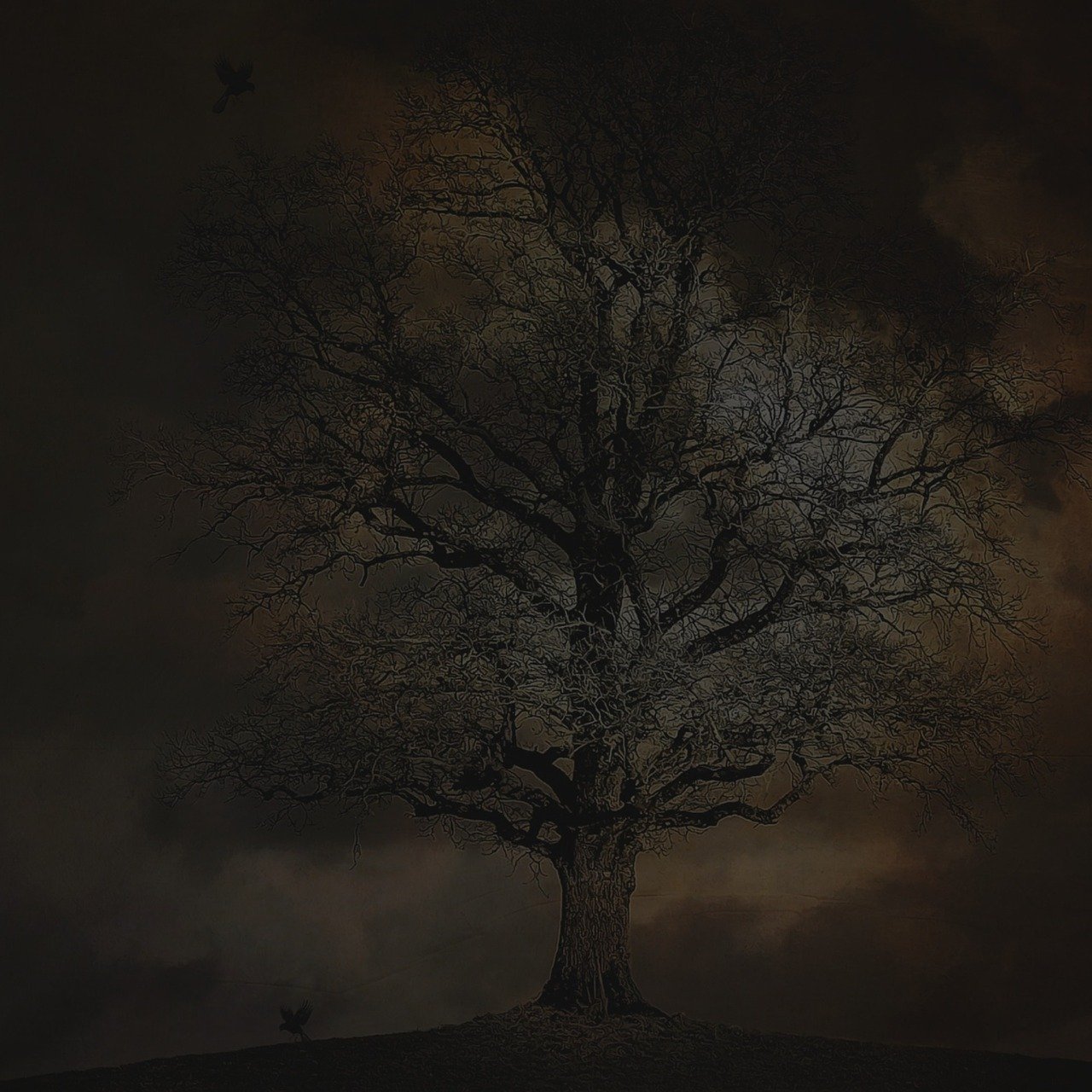
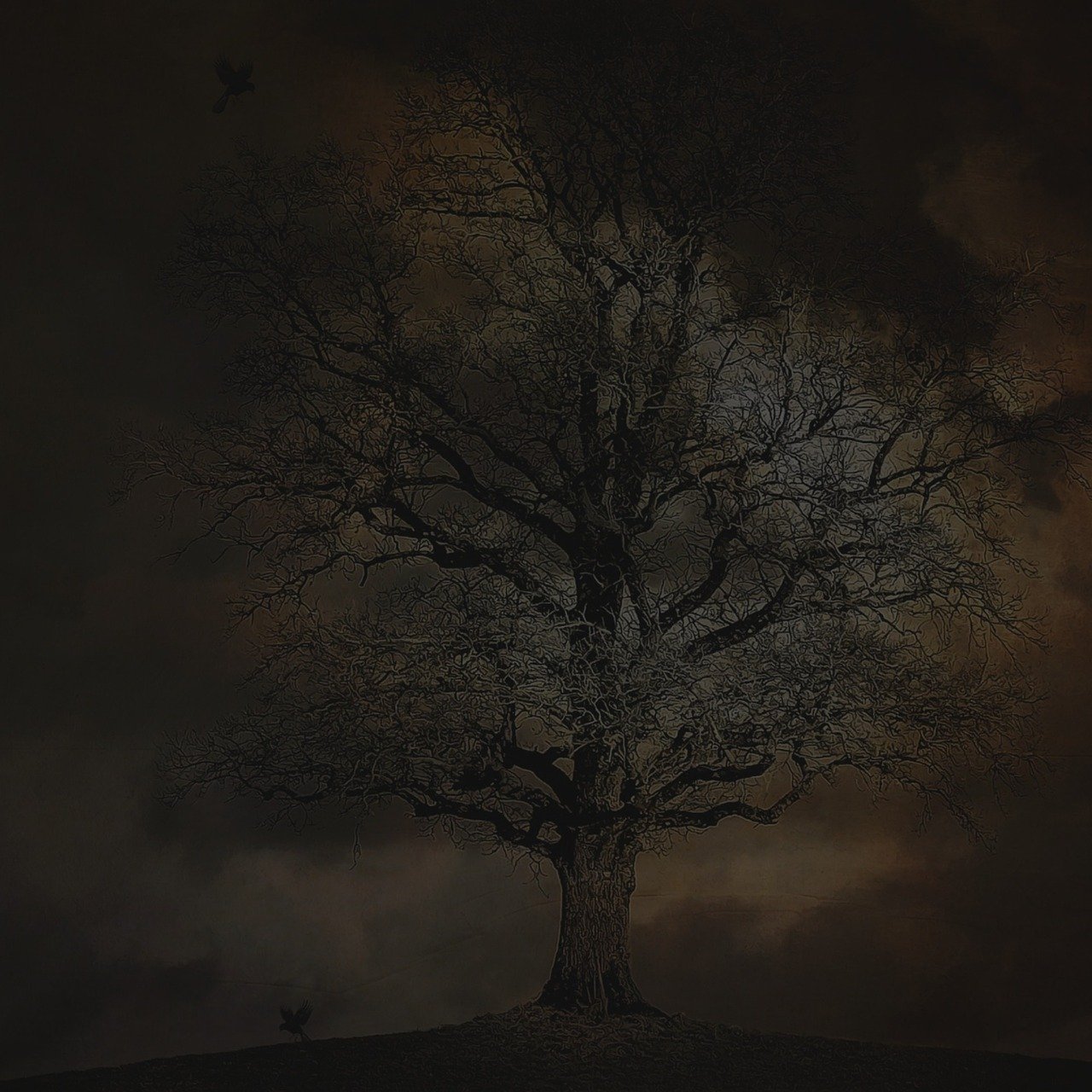
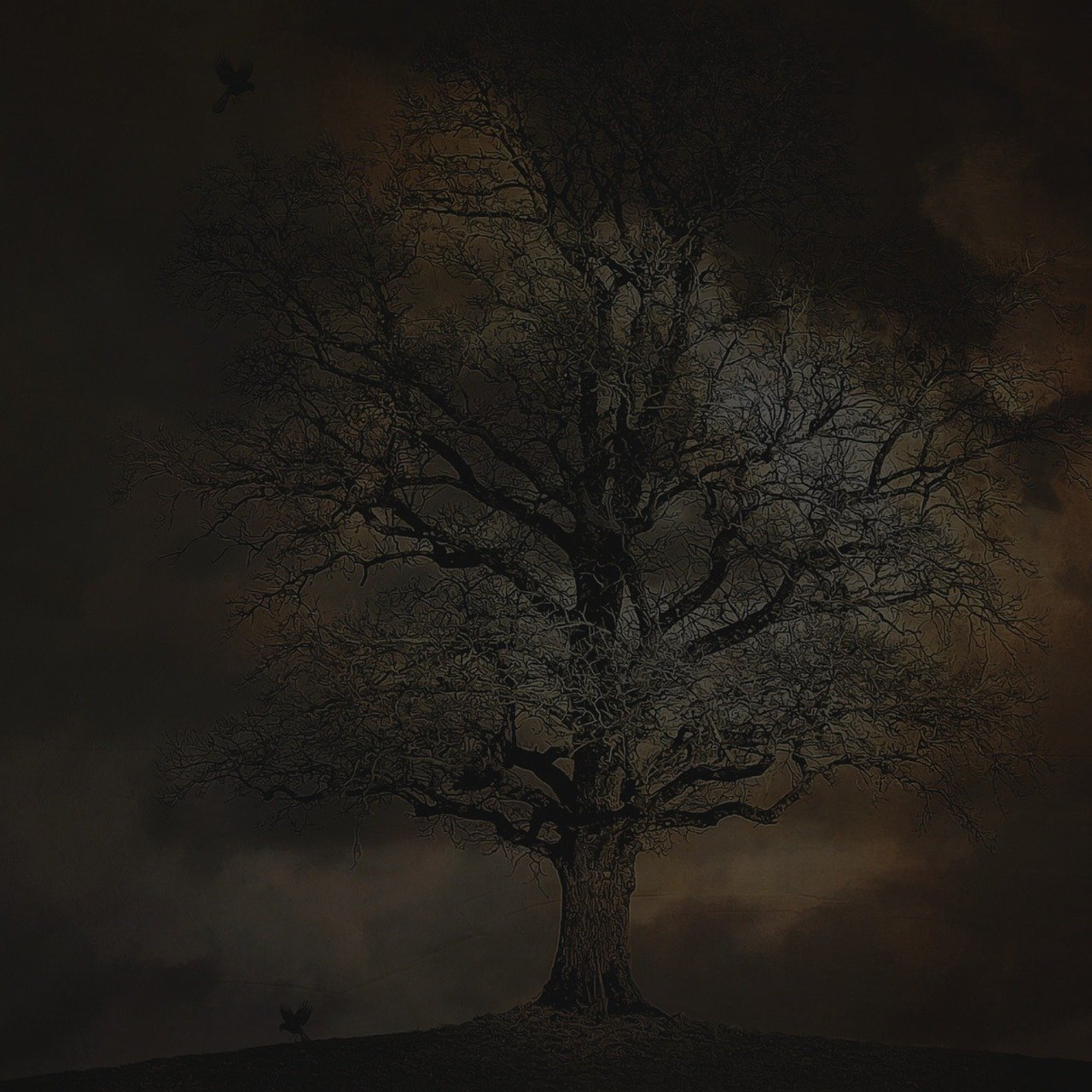
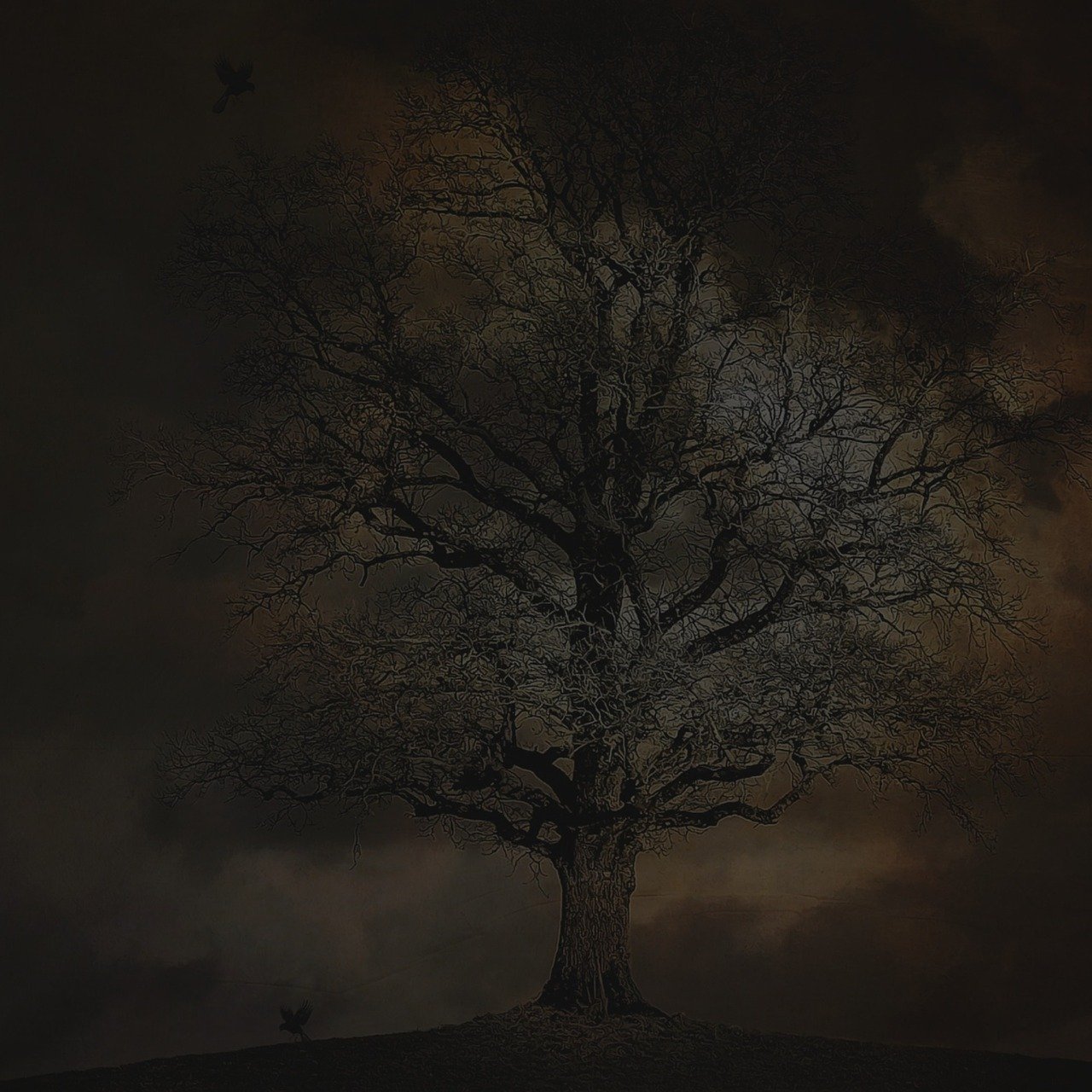
Image by ttktmn0 from Pixabay

This is the first of what I thirty-one reviews of horror/ghost short stories I have planned for October as a Halloween countdown. Enjoy and wish me luck.

1) “The Ambitious Guest” by Nathaniel Hawthorne

A family runs an inn in a remote area of the White Mountains of New Hampshire. They are happy. Because their cottage sits on the road between Maine on the one side and the Green Mountains and the St. Lawrence on the other, they receive a lot of traffic. The stagecoach always stops by their door, bringing news and company.

Danger lurks by their home as well; steep mountains tower over their cottage. They often hear rockslides, startling them in the night.

One night a stranger, a young man (who is never named), arrives on foot. The family makes him welcome. He feels at ease, almost as if he were family, and tells them he is on his way to Burlington, Vermont, and beyond.

After dinner, the young man starts talking about his future. He has yet to achieve anything, but he has plans. He tells the family, “But I cannot die till I have achieved my destiny. Then, let Death come! I shall have built my monument!”

There’d be no story if it worked out that way, would there?

Thoughts:

Hawthorne uses the expected florid nineteenth-century prose to tell his tale, all the stuff that made The Scarlett Letter such a slog in high school. This sad little yarn starts in a remote but happy place. The young man is at first downcast but warms to the happy family. He acknowledges his long road ahead—both the literal and the metaphorical ones—but sees this as a challenge, not a burden. Hawthorne even hints that love might spark between the visitor and the family’s seventeen-year-old daughter.

The reader sympathizes with the family and their guest, who are all good—if perhaps naïve—people. They’ve planned but cannot see all possibilities. Nature has the last word, and nature is as cruel as it is indifferent.

Hawthorne based “The Ambitious Guest” on a real-life disaster, the 1826 Willey Tragedy (The Willey Family Tragedy | Appalachian Mountain Club (AMC) (outdoors.org)), in which seven members of the Willey family plus two hired hands lost their lives following flooding and an avalanche.

This short read is easily finished in one sitting. My experience was not so much of horror but simple sadness.

“The Ambitious Guest” was collected in Hawthorne’s work, Twice-Told Tales.

The story can be read here. (The Project Gutenberg eBook of Twice-Told Tales, by Nathaniel Hawthorne)

YouTube: The Ambitious Guest – Nathaniel Hawthorne (audiobook) – YouTube

Librivox: Twice Told Tales by Nathaniel Hawthorne (1804 – 1864): The Ambitious Guest on Apple Podcasts


Bio: Nathaniel Hawthorne (1804-1864) was an American fiction writer whose Romantic-era short stories and novels center on themes of morality and the sinful nature of humans. He was born in New England, and some of his Puritan ancestors took part in persecuting accused witches during the Salem witch trials. In his 20s, he added a “w” to his surname to distance himself from them.

He was a friend of Franklin Pierce, who later became the fourteenth president. In college, he met poet Henry Wadsworth Longfellow, future congressman Jonathan Cilley, and future naval reformer Horatio Bridge. After meeting Hawthorne, author Herman Melville dedicated Moby Dick to him.

Among Hawthorne’s writing are: The Scalet Letter (as anyone who went to high school in the United States knows), Twice-Told Tales, The House of the Seven Gables, and Tanglewood Tales.


Title: “The Ambitious Guest”
Author: Nathaniel Hawthorne (1804-1864)
First published: New England Magazine, June 1835

Review of “The Last Word: The New York Times Book of Obituaries and Farewells A Celebration of Unusual Lives” Edited by Marvin Siegel

image from Goodreads

The Stuff:

This book is a collection of approximately 90 obituaries and write-ups from the New York Times Magazine. The focus is on interesting lives, regardless of whether the person was famous or lived an everyday life. Not all are saints. One is a reputed gangster, whom one acquaintance referred to as “a nice man.”

Most selections are positive, leaving you believing the person had a good run. A few are heart-wrenching, like that of seven-year-old pilot Jessica Dubroff, who died in a plane crash with her father and flight instructor after taking off in bad weather while trying to fly across the country.

In his foreword, Russell Baker writes, “The rule here is: no giants… the nature of twentieth-century life has also been shaped by multitudes of whom most of us have never heard.” (p. vii)

Typical of the sort of person included is Anne Scheiber, though her story is hardly typical. Scheiber retired from the IRS in 1944 with some $5000 in savings. She lived quietly but invested aggressively. By the time of her death in 1995 at 101, she’d built a nest egg of $22 million, which she bequeathed to the Yeshiva University for women students. She’d never attended the school, nor had the school ever heard of her. The donation was her way of empowering women after experiencing discrimination during her time at the IRS.

There are some limits, of course. The obits are from one newspaper—The New York Times—and are from a short period of time. Most are from the 1990s, with a few from the 1980s. Most (though not all) are of white people from the East Coast. Yet what a slice of human experience!

Thoughts:

No organizing principle, either by topic or chronology, seems to order the selections. An entry for Zora Arkus-Duntov, an engineer who popularized the Corvette and died in April 1996, follows one for Fred Rosenstiel, who was independently wealthy and liked to plant gardens in New York. Rosenstiel died in June 1995.

Of course, reading this brings sadness. One sees grieving families. Even when a particular death is best viewed as a release from suffering, there is always grief for the life that was. For example, in “The Long Good-bye” (p. 411), Dudley Clendinen writes, “My cousin Florence Hosch finally died the Wednesday before Christmas about a thousand days after she wished to.” Florence, he tells the reader, was nearly ninety-three. She had ninety good years, but the last three years were wretched.

I once read an article about the current generation trying to use Windows 95 on hardware then in use. “You mean you have to turn the monitor on?” I’ve joked about the anachronistic skill I recall of being able to center text on something called a typewriter.

In his foreword, Russell Baker writes:

“Consider the multitudes who once knew how to cook in an open fireplace, how to harness a horse to a buggy, how to hand-crank a tin lizzie on a freezing morning, how to butcher a hog, how to bake a cake from scratch, how to bank a coal furnace.” (p. viii)

With the passing of generations, such ready knowledge is often lost.

The last entry was of those buried in Potter’s Field on Hart Island, unclaimed bodies and infants. A group of inmates lives there and attends to the burials.

This brought to mind the refrigerator trucks NYC used at the height of the COVID-19 pandemic to hold the bodies of those lost to the disease. A distant relative of mine passed away about the same time, not to COVID, but to a constellation of conditions arising from chronic alcoholism—at the age of thirty-four!

It made the words of one of the workers burying the unclaimed bodies all the more poignant: “Ought to worry about these poor folks when they’re alive. Not now.”

No one gets out of this alive, so it’s best to try to make something of what we’ve got while we’re here—kindness to family, friends, and strangers; finding joy; and perhaps learning to bake a cake from scratch—even if we don’t get written up in The New York Times. Life is finite and thus precious.


Title: The Last Word: The New York Times Book of Obituaries and Farewells
Author: Ed. Marvin Siegel
First published: 1997

Review of “The Man in the White Suit” (1951)

trailer from YouTube

Another departure from our usual monster/horror movie for Saturday night is this black-and-white satire of the idealistic individual who upsets everybody’s applecart. It brought to mind a bit of Ayn Rand’s Anthem, Rush’s 2112, and the end of the original Frankenstein movie, but added a bit of humor.

Plot:

Hapless Sidney Stratton (a really young Alec Guinness) has been requisitioning himself lab equipment at the textile mill where he works to help develop what he believes will be a revolutionary new fabric—one that never needs to be cleaned and does not deteriorate. Think of the convenience! Think of the time not spent on laundry! Or money not spent on having to buy new clothes!

His plot is soon uncovered and his separation from his employer follows one of many such separations. Through a set of unlikely circumstances, he finds himself helping to install new equipment at a rival mill. He’s not an employee yet…

He sets up a newer, bigger rig. Alan Birnley (Cecil Parker), the head of this mill, sees the virtue of what Sidney is doing. He even pays for some radioactive thorium.

After some explosions, Sidney succeeds. He has a suit made. It is bright white because the material won’t take a dye. At first, Birnley is delighted, but some of his cohorts mention that it will hurt their business if everyone starts wearing clothes that don’t need to be cleaned or replaced.

“Are you mad?” a fellow miller-owner asks. “It’ll knock the bottom out of everything right down to the primary producers. What about the sheep farmers, the cotton growers, the importers, and the middlemen? It’ll ruin all of them.”

“Let’s stick to the point. What about us?” another chimes in.

Seeing things in a different light, Birnley attempts to buy the formula from Sidney. He can’t be bought and seeks refuge among friends, the labor unionists. He’s surprised to learn they are angry about the new fabric as well. They lock him up.

Thoughts:

The movie has a great deal of silliness, beginning with Sidney’s requisitioning lab equipment for himself. Other lab workers don’t know what the machine he made is. It makes noises like a calliope and sometimes lets off a bit of steam, but to what end? Where did it come from? What is it doing? What are the charge numbers? The look on Sidney’s face while people try to puzzle these questions out is priceless.

Sidney is used to managers not hearing his crackpot ideas and firing him when he goes ahead with work on his own. An eternal optimist, he’s sure he’s on to something if only small-minded people will give him a chance.

And when the manufacturers turn against him or want to buy his formula to suppress it, won’t trade unionists and workers support him? The eternal optimist doesn’t understand until he’s told that fabric that doesn’t wear out means only one suit will be made. Workers will lose their jobs. No one besides him wants this cloth made.

Even Sidney’s landlady, Mrs. Watson (Edie Martin), snaps at him, “Why can’t you scientists leave things alone? What about my bit of washing when there’s no washing to do?”

One can’t help but feel for Sidney. He only wants to make the world a better place (and get rich). Especially disappointing is when his neighbor, the unionist Bertha (Vida Hope), locks him in an apartment for his own good. A passing child, Gladdie (Mandie Miller), helps secure his release.

The final chase scene, with both the workers and the industrialists’ muscle chasing poor Sidney through the streets, brings to mind the peasants with torches and pitchforks chasing after the Frankenstein monster.

This movie won the 1952 Top Foreign Film Award from the National Board of Review (USA). It was also nominated for the 1953 Best Writing (Screenplay) by the Academy Awards (USA) and nominated by BAFTA for 1951 Best British Film and Best Film from any Source.

The film can be watched here.

Title: The Man in the White Suit (1951)

Directed by
Alexander Mackendrick

Writing Credits
Roger MacDougall…(play)
Roger MacDougall…(screenplay) &
John Dighton …(screenplay) &
Alexander Mackendrick…(screenplay)

Cast (in credits order)
Alec Guinness…Sidney Stratton
Joan Greenwood…Daphne Birnley
Cecil Parker…Alan Birnley
Michael Gough…Michael Corland
Ernest Thesiger…Sir John Kierla

Released: 1951
Length: 1 hour, 25 minutes

Review of “Bird by Bird: Some Instructions on Writing and Life” by Anne Lamott

Image from goodreads

The Stuff:

This book consists of short, interrelated essays and anecdotes on writing and being a writer—being a human—grouped around larger themes. The parts are 1) Writing, 2) The Writing Frame of Mind, 3) Help Along the Way, 4) Publication and Other Reasons to Write, and 5) The Last Class.

One of the essays in the “Writing” section is titled “Shitty First Drafts.” Here, Lamott writes, “All good writers write [shitty first drafts]. This is how we end up with good second drafts and terrific third drafts.”

She then goes on to say that despite the perception that some great writers can sit down and hammer out a perfect draft, “Not one of them writes elegant first drafts. All right, one of them does, but we do not like her very much.” (pp. 21-22)

This sets the tenor for the whole book.

Thoughts:

I laughed a lot while reading this. Lamott has many good one-liners. She is not afraid to be vulnerable or show her own failings. When a newbie writing friend keeps calling to extol her sudden unexpected success (“I don’t know why God is sending me so much money this year!”), Lamott is supportive of her friend but shows the reader how jealous she is. The reader sees her trying to rid herself of that jealousy and anger. Something occurs to her to see it from a new perspective.

The idea of writer’s block also arises. She discusses this in her typical roundabout way. See it not as a block but as a well that’s gone dry. Maybe you need a change of pace. Maybe you need to remember.

While I found the book a pleasant read, I hesitate to say that it was helpful with respect to writing. Lamott is a cheerleader—nothing wrong with that. But for me, it was too amorphous and vague. It was as if she expected the reader to get her points by osmosis, as if she were saying something like:

“Now get out there and write! Yeah, it’ll suck, and you’ll want to do something more fun. Just do a little bit. And do a little more. Do what you want to do. Make what you’ve written suck less.”

Many people enjoy this book. It is indeed enjoyable. Helpful? Maybe.

Bio: Anne Lamott (b. 1954) is an American author, writer, teacher, and speaker. She is the daughter of the late writer Kenneth Lamott. Among her works are Imperfect Birds (2010) and Small Victories: Spotting Improbable Moments of Grace (2014).


Title: Bird by Bird: Some Instructions on Writing and Life
Author: Anne Lamott (b. 1954)
First published: 1994

Flash Fiction Published: “Words to Live By”

A little early for Halloween, but a flash fiction piece of mine, “Words to Live By,” was published in an online magazine titled Danse Macabre.

I always liked this silly little piece about a university professor who is friends with the ghost of a mariner from days gone by. The captain has a fondness for rum and something of a potty mouth. Unfortunately, our hero Amelia also runs afoul of a demon.

This was a lot of fun to write.

Review of “The Frontiersman: The Real Life and Many Legends of Davy Crockett” by Mark Derr

from goodreads

The Stuff:

This is a non-sensationalized biography of early American Davy Crockett (1786-1836), frontiersman and congressman, written by a distant relative. Author Mark Derr seeks to wade through the many myths and find the person behind the stories. He adopts a more-or-less neutral tone, neither excoriating nor lionizing the book’s subject. He openly admits, for example, that the wealth of Crockett’s second wife allowed him to enter politics and that the family owned slaves, whom they sold when pressed for money—a little detail the folks at Disney didn’t mention.

Derr opens his book with a discussion of the Disney TV shows and movie, which took some factual and legendary elements and added some of their own fiction to create an American hero who won every fight except the last one at the Alamo. Disney’s portrayal set off a frenzy for coonskin caps in the mid-50s.

Thoughts:

Derr writes that as both a distant relative and an admirer of the (ghostwritten) autobiography A Narrative of the Life of David Crockett of the State of Tennessee, he set out to find the man behind all the legends. He relied on what documentary evidence he could find—marriage licenses, land deeds, sale of slaves, or summaries of court cases. He is careful to state what is known, what is probable, and when he is speculating.

Complicating matters is that the legends began in Crockett’s lifetime, sometimes with his approval or encouragement. For example, Crockett often exaggerated his illiteracy. In the days before spell-checkers and handy dictionaries, people tended to spell phonetically unless they’d had a formal education. Like many of the era and background, Crockett’s family found a formal education beyond their means and, frankly, unnecessary. David could read and write—quaintly—as demonstrated in a handful of letters he wrote to family members. Derr quotes from some of these.

In the 1830s, a play called The Lion of the West opened in New York, half-poking fun, half-celebrating Crockett with a character named “Nimrod* Wildfire.” (In England, the play was titled The Kentuckian.) Nimrod, a congressman, introduces himself to a New York uncle, saying, “I’m half horse, half alligator, a touch of the airthquake with a sprinkling of the steamboat.” He continues, “I’ve got the prettiest sister, fastest horse, and ugliest dog in the deestrict.”

The narrative gets into the weeds a bit when describing the legislation that Crockett unsuccessfully championed, but it also demonstrates how bitter he became. His rancor toward his political opponents, real and perceived, only increased with time. After losing his congressional seat, he is supposed to have told his constituents, “You can go to hell. I’ll go to Texas.”

It’s hard not to feel sadness after reading this. I sensed a lot of “almost.” Crockett sponsored needed land reform while in Congress that went nowhere. A version of his bill passed sometime after his death. He opposed the removal of Native Americans. He seems to have been a glib talker, always ready with a story or joke.

Perhaps because the author intended to remain as neutral as possible, the prose can get a little dry at times, but that is forgivable. The hero, the Davy Crockett of Disney, born on the mountaintop in Tennessee, is an easier sale than the fallible human. At the same time, the Davy who killed him a b’ar when he was only three is a cardboard cutout rather than a real person. The human is more interesting, IMHO.

As for recommending the book, I can’t say it’s a page-turner, but it is interesting.


* “Nimrod” is used now to denote a stupid or clumsy guy. My guess here is that it hearkens back to its older use, that is, speaking of a hunter.


Title: The Frontiersman: The Real Life and the Many Legends of Davy Crockett
Author: Mark Derr
First published: 1993

Review of “Pale Rider” (1985)

This was a departure from our usual Saturday pizza and bad movie fare, a Western with some supernatural flavor. Not to give too much away, but the bad guys got their comeuppance in spades. Or lead.

Plot:

In the beginning (not the last biblical reference to come), two things are happening. First, a group of men rides horses hell-for-leather. Second, another group of men pans for gold in a small stream someplace in California sometime after the Civil War. In the camp of the latter, a woman named Sarah Wheeler (Carrie Snodgress) hangs up laundry. Her fourteen-year-old daughter, Megan ((Sydney Penny), runs after her dog, calling, “Lindsey!” Megan wears long braids. A dog starts barking.

This will not end well.

The hell-for-leather group descends on the guys trying to mine and tears their camp apart. For good measure, one of them shoots and kills Lindsey in front of Megan. The only other fatality is Megan’s grandfather, whose heart gives out, so there’s no sense going to the law.

The raiders ride off.

Megan buries her dog and prays for a miracle.  “If you don’t help us, we’re all gonna die,” she tells God.

The viewer then sees a tall man (Clint Eastwood) on a white mottled horse riding through the countryside.

After the raid, Hull Barret (Michael Moriarty), the claim owner, takes the wagon into town for supplies. A couple of people tell him he’s stupid. He ignores them.

In town, he picks up some supplies—the dry goods store owners generously extend him credit again—and loads up his wagon. Thugs from a mining concern that wants Barret’s land surround him and pick up wooden ax (?) handles propped up outside the store. One of them notices the same tall stranger on a white mottled horse at the end of the street, who quickly vanishes. They beat the daylights out of Barret. As one is about to set fire to the goods the poor man has just bought, someone douses the firebug with a barrel of water.

The man on the white horse tells him, “You shouldn’t play with matches.” He picks the last ax handle. The roughs descend on him but soon find themselves in a bleeding, moaning pile.

The stranger rides off. Barret follows him, expressing gratitude, and offers him hospitality—“three hots and a cot.”

Inside his room in Barret’s cabin, the stranger takes his shirt to wash his face. Barret catches a glimpse of his back, which bears six marks looking like gunshot wound scars. How did he survive this?

The stranger comes dressed for dinner in a preacher’s clothing. Everyone calls him “Preacher” after that. After a tour of the camp in the morning and assurances that Barret’s claim is legal, that the other miner is trying to run him off, he asks Barret to put him to work.

Thoughts:

The “pale rider” refers to one of the four horsemen of the Apocalypse, death. This is reinforced by Megan reading the Bible passage in question to her mother just as Barret brings the Preacher to the camp. “Now fetch me butter and syrup,” Mrs. Wheeler says.

The body count is quite high in this flick. Preacher barely works up a sweat. At times, he seems almost to teleport. In one scene, he sits atop his horse while a train passes between him and the viewer. Once the train passes from view, only empty plains remain.

Who is the Preacher? The viewer receives some answers by the end of the movie, but not all.

While the Preacher gets to utter some cute, pithy sayings, one of the best scenes goes to Megan. As she’s burying Lindsey, she recites Psalm 23 but adds her own thoughts along the way:

“’The Lord is my shepherd, I shall not want’—But I do want. ‘He leadeth me beside still waters. He restoreth my soul’—But they killed my dog. ‘Yea, though I walk through the valley of the shadow of death, I shall fear no evil’—But I am afraid. ‘Thou art with me. Thy rod and thy staff, they comfort me’—We need a miracle. ‘Thy loving kindness and mercy shall follow me all the days of my life’—If you exist. ‘And I shall dwell in the house of the Lord forever’—But I’d like to get more of this life first. If you don’t help us, we’re all gonna die. Please. Just one miracle. Amen.”

This is a traditional Western. A hero comes by to help save a little guy from a rich guy who has corrupted all authority in town. The supernatural elements, which are never completely explained, are a new twist on an old story. Is Preacher the miracle Megan prayed for? Is he something else? Is he really a preacher? Maybe he’s a reformed gunslinger? Maybe he’s a ghost?

Coy LaHood (Richard Dysart ), the miner trying to run the group off their claim, is disappointed to hear there’s a man of faith with the “tin-pans,” as the bad guys contemptuously refer to our heroes. A man of faith can give them faith and bind them together. He tries to bribe, corrupt, and intimidate Preacher.

Preacher doesn’t save the day in the old-fashioned way. He has his own score to settle, one that perhaps involves the six scars on his back. He offers help, but it is up to the miners to take care of themselves.

Preacher tells him that a man can’t serve God and Mamon and adds, “Mamon being money.”

I don’t know why the line struck me so funny. I doubt anyone intended it such. It seemed so out of place, aimed more at an audience who hadn’t been to Sunday school in a while, if at all.

The big fly in the ointment for me about the movie was women, including underage Megan Wheeler, throwing themselves at Preacher. To his credit, he declines all offers, but what on earth is the attraction—outside of novelty? ICK

There is a good deal of violence in this—some of it rather graphic—including a lot of death and an attempted rape. I’m guessing that the latter is responsible for the movie’s “R” rating. There is no sex, and if there is any nudity, it was too brief for me to notice.

The Western Writers of America awarded the 1986 Spur Award to the movie for Best Screenplay. I agree; this is one of the more intriguing movies I’ve seen in a long time. Sydney Penny received a 1986 Exceptional Performance by a Young Actress – Motion Picture for her portrayal of Megan Wheeler. The film was 1985 a nominee for Palme d’Or at the Cannes Film Festival.

While I generally don’t like Westerns, I enjoyed this movie. It left a lot for the viewer to interpret, even with the “Mamon being money” line.


Title: Pale Rider (1985)

Directed by
Clint Eastwood

Writing Credits
Michael Butler…(written by) &
Dennis Shryack…(written by)

Cast (in credits order)
Clint Eastwood…Preacher
Michael Moriarty…Hull Barret
Carrie Snodgress…Sarah Wheeler
Chris Penn…Josh LaHood (as Christopher Penn)
Richard Dysart…Coy LaHood
Sydney Penny…Megan Wheeler

Released: 1985
Rated: R
Length: 1 hour, 55 minutes

Review of “The Roman Way” by Edith Hamilton

author’s pic

The Stuff: The author wishes to portray Roman culture and character based on the writings of Roman poets and playwrights. Despite her awareness that this strategy leaves out vast swaths of the Roman world, including women, slaves, artisans, and the disadvantaged, she confines her study to the lettered, leisured male.

Proceeding roughly chronologically, she begins with two early comedic playwrights, Plautus and Terence. Never heard of them? Never fear.

“The comedy of each age,” Hamilton writes, “holds up a mirror to the people of that age.”

I hope that two thousand years from now, sociologists/historians don’t watch sitcoms and think they have anything to do with the reality of the present day.

She discusses Cicero at length, Horace’s odes to the good life, the tortured love poetry of Catullus for his ”Lesbia,” and Juvenal’s biting Satires.

Of course, this is not everything, but these are the long poles in the tent.

Thoughts:

Using these, and other writings, particularly of the Stoics, Hamilton compares and contrasts the Roman character with the Greek. Both fought many wars. In Greek literature, no one wants to die—fair enough. Romans, on the other hand, are all too willing to die. No Greek would have written anything like “Dulce et decorum est pro patria mori” (“Sweet and fitting it is to die for one’s country.”), but the Roman Horace did.

Another topic she discusses at length is the differences between the “classic” and the “romantic” Romans. The classic Romans adhere to facts and measurable things. The romantic Romans indulge in the poetic and the not-quite-so-literally-true.

Hamilton acknowledges that Rome was at war for most of its existence and indulged in the games, where condemned people or professionals were killed for public amusement. One of Rome’s great legacies is law and a sense of justice.

“The little town on the seven hills conquered the other little towns around because her citizens could obey orders,” Hamilton writes.

…maybe.

It is tough for me to recommend this or pitch against the wall. I enjoyed reading this. There is a lot of good information, and the quick survey of centuries of Latin literature was engaging. Still, I can’t get around Hamilton’s outdated thinking and conclusions.

So. A conditional recommendation. If you’re interested in classical literature, yes. And take Hamilton’s musings cum grānō salis (with a grain of salt).

Bio: Edith Hamilton (1867-1963) was an American classist and educator specializing in the teaching of Latin. Her books, especially The Greek Way and The Roman Way, popularized classical culture. They were written in a style easily accessible to the everyday reader.


Title: The Roman Way
Author: Edith Hamilton (1867-1963)
First published: 1932

Review of “The Uninvited” (1944)

This was an enjoyable Saturday night pizza and bad movie flick for more reasons than no ghoulies popped out of a toilet. It was an old-fashioned haunted house story about the ghosts of those who have taken the lifetime squabbles beyond the grave and aren’t too concerned about who gets hurt.

Plot:

While on vacation on the Devonshire Coast in 1937, brother and sister Roderick and Pamela Fitzgerald (Ray Milland and Ruth Hussey) come across an empty house that reminds them of their childhood home. On the spur of the moment, they decide to buy it.

They first meet the owner’s granddaughter, Stella Meredith (Gail Russell), who welcomes them until they tell her they want to buy the old house known as Windward. She assures them it’s not for sale and practically kicks them out.

The owner, Commander Beech (Donald Crisp), arrives and proves only too happy to sell them the house for well below what it’s worth. He mentions “disturbances” tenants have complained about.

Roderick and Pamela brush off the ghost stories.

Now that they have keys, Rod and Pam unlock a room at the top of the house and find a painter’s studio, with a skylight and large windows to a view of the sea below. Rod, a music critic, decides he can use the room to compose. Both he and Pam feel uncomfortable in the empty room, however, and leave.

Rod runs across Stella in town. She tells him that she’s now happy he and Pam are in the house. Her mother would not want her to resent them. Rod knows that Stella’s mother is long deceased. Stella clarified that she has a portrait of her mother. He invites her to go boating rather than run errands for her grandfather.

He is clearly infatuated with her and invites her to dinner in a few weeks once he returns from London and everything is settled at the house. She happily agrees.

When Rod returns with their maid Lizzie Flynn (Barbara Everest), he’s pleased with what his sister has done with the house, but their dog has run off. The dog wouldn’t stay in the place.

In the middle of the night, he hears a woman crying. He gets up. Pam meets him. She says it happens frequently and ends at dawn. She’s never been able to find anything.

After the goings-on, Lizzie Flynn packs her bags and her cat, Whiskey. She will not stay another night in the house.

Thoughts:

This was originally a novel written by Dorothy Macardle. It is moody, gothic, and also funny, with beautiful scenes of the coast. I don’t know how closely the movie adheres to the book.

The house itself is lovely. Anyone could see why an artist (Stella’s father) or a composer like Rod would like it. The studio is lit by natural light—which is good because the house has no electricity.

The commander wishes to protect Stella. He sees malignant forces in the house wishing her ill. Stella is not convinced, believing the house haunted by the presence of the mother who loved her and died by falling off a cliff when she herself was only three. She will not be frightened and goes to dinner at Windward with the Fitzgeralds.

Things are not quite as they seem, of course. While the mystery becomes easy enough to see through, this old-fashioned haunted house flick was engaging and fun. Not all of it made sense. The question of why the studio was such an uncomfortable place is never answered. Perhaps it is in the book.

I liked it.

The film was a 1945 Oscar Nominee for Best Cinematography, Black-and-White.

I could not find it for free download. It is available on YouTube to rent or purchase.

There is a 2009 film by the same name, but is doesn’t appear to be anything like this one.


Title: The Uninvited (1944)

Directed by
Lewis Allen

Writing Credits
Dodie Smith…(screen play) and
Frank Partos…(screen play)
Dorothy Macardle…(novel)

Cast (in credits order)
Ray Milland…Roderick Fitzgerald
Ruth Hussey…Pamela Fitzgerald
Donald Crisp…Cmdr. Beech
Cornelia Otis Skinner…Miss Holloway
Dorothy Stickney…Miss Bird
Barbara Everest…Lizzie Flynn

Released: 1944
Length: 1 hour, 39 minutes