This is a post by a Victoria Lynn Smith, whom I follow. I found it excellent and thought I would like to reblog it. With the author’s permission, here it is.
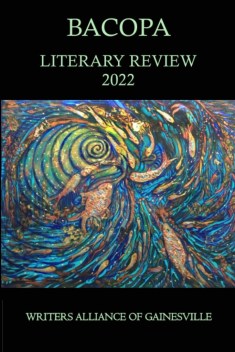
[“Show and Tell to Remember” was originally published by the Bacopa Literary Review 2022. It earned an honorable mention for humor.]
Inside my dress pocket, I had the best thing for show and tell. In 1964, I was new at Pleasant View Elementary, and having started in October instead of September, I was an outsider. My kindergarten classmates were going to be impressed. The popular girls would envy me and ask me to jump rope with them during recess. The cute boys would elbow each other and try to sit by me at snack time. My pretty teacher, with bouncing brown hair that flipped up in a long continuous curl around her neck, would look at me with approval.
“Vickie,” the teacher said, “it’s your turn.”
I snapped out of my daydream, rose from the floor, and stood next to the teacher who sat in a chair…
trailer from YouTube. I’m not sure all the footage is from this flick…
Happy New Year, one and all. Hope 2023 brings the reader all good things.
This is our New Year’s Eve Saturday night pizza and bad movie offering. We watched it with MST3K. The dearly beloved wisely chose to invest in frozen rather than ordering our usual take-out. It went down quite well. The prosecco was yummy.
And then there’s the flick.
The Plot:
Aging wizard Caedmon (Mel Welles) of Nogg is a bit off his game. He was never much of a hotshot, and time has not been kind. Imagine his surprise when he strolls out of his cave one morning, and the Grand Wizard Vanir (Wayne Grace) appears in his coffee (or is it his wash? It’s hard to tell) to tell him to seek the boy Tyor of Eedok, the Chosen One. They will defeat the three evil wizards who rule the three kingdoms.
How will he find the Chosen One? Vanir didn’t say, but we next see Caedmon walk up to a field behind a pile of hay, watching a mother and son working. The mother has been expecting him. Caedmon promises to transform the pile of hay into gold but transforms it into a pile of what cows generally transform hay into.
The son, Tyor (Bobby Jacoby), expresses no regrets, and together they go to, you know, defeat three evil and ruthless wizards and unite the kingdoms or some such. They first stop at a bar. Caedmon asks for “the Dark One”—a human, not a drink. The barkeep (David Carridine) says he’s not around. After he throws a dagger and kills a patron for arguing too loudly (or something—tough house rules), it becomes clear the barkeep is the Dark One. They could use his help on their quest. The Dark One declines. He’s got an establishment to run, ya know.
Tyor must pass a test at each kingdom and gain a magic talisman, now held by one of the evil wizards. His first task is to free Prince Erman (Blake Bahner), imprisoned with three maidens by the wizard Loki. Tyor’s attention is on the three maidens. Erman assures the maidens he loves them all.
Once freed, he’s off to battle the evil guy’s minions while Tyor—if he can drag his eyes from the maidens’ breasts—has to defeat Loki and seize the Amulet of Light.
Shouldn’t there be level-up music once Loki receives his comeuppance?
One kingdom down, two to go…
Thoughts:
Other than the name, the nails-on-the-chalkboard lousy dialogue, and the evil seductress, this movie has nothing in common with the earlier Wizards of the Lost Kingdom (1985). None of the characters or actors reappear.
Let me offer this as a sample of the dialogue from the scene where Tyor and Caedmon meet:
Tyor’s mom: I was sent a dream that you might be called by a fat wizard bearing the mark Vanir.
Tyor: I thought you said it was just a birthmark.
Tyor’s mom: The day I’ve always feared. In some ways, it’s a relief.
Caedmon: It’s your duty to accept the quest, Tyor, and reunite the powers of creation. Only then can the evil lords be conquered.
It doesn’t get any better.
In fights, the bad guys fall over when a sword is waved at them or pointed in their direction. You can’t get good evil minions anymore.
Granted, the intended audience for the film is kids. The humor is as subtle as a cudgel, but I admit I did chuckle a bit. The film’s saving grace is that it didn’t take itself seriously and didn’t offer that same insult to the viewer the earlier one did. Other than that…hmmm…
Distinctly missable movie, even for kids, IMseldomHO.
Title: Wizards of the Lost Kingdom II (1989)
Directed by Charles B. Griffith Writing Credits (in alphabetical order) Charles B. Griffith…(writer) Lance Smith…(writer)
Cast (in credits order) Mel Welles…Caedmon Bobby Jacoby…Tyor David Carradine…Dark One Susan Lee Hoffman…Idun Blake Bahner…Erman Lana Clarkson…Amathea
We had pizza and watched a bad movie with Svengoolie while waiting for Santa. Fortunately, we had enough leftovers we didn’t have to venture out.
Plot:
It’s graduation day 1951 at Dugan Detective School. Among those receiving diplomas are Bud Alexander (Bud Abbott) and Lou Francis (Lou Costello).
Lou says, “This is the happiest day of my life. How did I ever graduate?”
Bud tells him, “I slipped the guy twenty bucks. Now keep quiet.”
This pretty much sets the tenor for the movie.
Their first case involves Tommy Nelson, a boxer accused of beating his manager to death. He hires Lou and Bud to help prove him innocent. The boys agree, but Lou is also tempted by the reward money the police offer for turning Nelson in.
Tommy decides the perfect way to find the real killer is for Bud to go undercover as a professional boxer. Nelson will do the actual boxing. What could go wrong?
Thoughts:
This film is one of seven “Abbott and Costello Meet” movies made between 1948 and 1955. Many—but not all—of them involved Universal Studios monsters.
The movie calls back to the original 1933 The Invisible Man first with a picture of Claude Rains as the inventor of the invisibility serum. Rains played the original invisible man, Jack Griffin. The demonstration of the serum on guinea pigs in little harnesses in the present film also took place in the original.
That’s about where the similarity stops. The original was a dark film where the main character’s invention drove him insane. He never reverted to his true, visible form until his death—almost like a werewolf.
This movie is silly; most scenes are setups for awkward and ridiculous situations. Boots Marsden (Adele Jergens), the girlfriend of the gangster Morgan (Sheldon Leonard), comes on to Bud to try to convince him to throw an upcoming fight. He’s torn because he likes her, but he doesn’t want to throw this fight… that he’s not going to win anyway. And she offers him a lot of money.
In a scene where Bud and Lou are at a restaurant with Tommy, the waiter has to deal with hearing Tommy’s order, but not seeing Tommy and wondering why Lou wants steak and spaghetti. The viewer gets a visual of Lou and Tommy sharing spaghetti, Lady and the Tramp style.
The good guys win, the bad guys—who are not very bright—get what’s coming to them.
While I can’t say this is a deep intellectual flick, it was a nice goofy hour’s entertainment. I enjoyed it.
Title: Bud Abbott and Lou Costello Meet the Invisible Man (1951)
Directed by Charles Lamont
Writing Credits Hugh Wedlock Jr….(story) and Howard Snyder…(story) Robert Lees…(screenplay) and Frederic I. Rinaldo…() and John Grant…(screenplay) H.G. Wells…(novel The Invisible Man)
Cast (in credits order screenplay) Bud Abbott…Bud Alexander Lou Costello…Lou Francis Nancy Guild…Helen Gray Arthur Franz…Tommy Nelson Adele Jergens…Boots Marsden Sheldon Leonard…Morgan William Frawley…Detective Roberts
This week’s pizza and bad movie offering is a fair-to-middling black-and-white bit of war propaganda. The wine was yummy, and the pizza was hot. We watched it with Svengoolie.
Plot:
Mild-mannered Frank Raymond (Jon Hall) is busy minding his print shop when four men barge in. They mention the name “Frank Griffin,”* lock the door, and pull the shades down. The strangers know this is his real name—he was named after his grandfather, the invisible man. Our hero still has some of his grandfather’s invisibility formula around, and they want it. They’re willing to resort to torture and slicing Frank’s fingers off.
At first, Frank accedes, but he fights them off and runs away.
Two of his assailants are SS Gruppenführer Conrad Stauffer (Cedric Hardwicke) and Baron Ikito (Peter Lorre). Lorre is suitably creepy and quietly threatening during the attack. As later becomes clear, he’s meant to portray a Japanese man. Did imperial Japan have barons? On the other hand, it might have been difficult to find Japanese actors to fill the role. Not the smallest obstacle was that at the time the movie was made, Japanese-Americans were being sent to internment camps.
The Allies approach Frank. Apparently, the government has known about him for a while, but they’re gentlemen and request his grandfather’s formula. Frank refuses; there are dangers with the formula. The Allies accept his refusal, albeit with regret.
The news comes the Japanese have bombed Pearl Harbor. Frank is all in. He offers his grandfather’s formula to the military on one condition: he must be the one to use it. Rumors have come that the Nazis plan to attack the United States. Without training, he’ll go behind enemy lines and retrieve the information the Allies need to prevent this attack.
Thoughts:
This film is part adventure and part comedy. The special effects might not pass muster in 2022, but for 1942, they were pretty good. Frank parachutes (apparently his first jump, too) into enemy territory. His head disappears, and he strips—in the air—so the bad guys can’t see him. Bad guys with swastika armbands take binoculars from their eyes and wipe the lenses, unable to believe what they see.
Reynolds lands on the roof of a barn. When the bad guy Nazis come looking for him, he defeats them by throwing hay on them from the loft and escapes to find a contact in a coffin-maker’s shop, Arnold Schmidt (Albert Basserman). Schmidt directs him to Maria Sorenson (Ilona Massey).
Is it tacky to remind the reader that Reynolds does all this in the buff?
At Maria Sorenson’s, he finds she’s getting ready to host a dinner guest, Gestapo Standartenführer Karl Heiser (J. Edward Bromberg). Reynolds gets a little tipsy. He’s also sweet on Maria and thus decides to ruin dinner, even though Heiser is second-in-command to Gruppenführer Stauffer, one of the guys who roughed him in his shop. Heiser also brags about talking to der Führer and about the big plan to attack the United States. Heiser balks at telling her exactly when, though.
Reynolds is not visible to the viewer during this scene. His antics devolve into slapstick—Heiser slaps food against his face, Reynolds plants a chicken bone in his pocket, and so on. At the point where the table tips and dumps everything (where did he get lobster during the war?) onto his lap, Maria laughs. Heiser has had enough. He posts a guard and struts off.
When Heiser’s boss Stauffer sees his clothes, he ‘fesses up to the dinner disaster. Mama Stauffer didn’t raise a Dummkopf. He clues into what’s happening and sets a trap.
There are a lot of special effects in this movie, and while they’re hardly perfect, they are good. I couldn’t help wondering if this movie didn’t help inspire some Indiana Jones movies. It has some airport scenes that bring that movie to mind, even if no one dies by propellor blade.
On the downside, the Nazis are mere cartoon buffoons and bullies. The Japanese are slimy, sinister, and inscrutable. In some way, the movie is neither fish nor fowl, an adventure film and slapstick at the same time. No doubt, plenty of folks know more on the subject than I do, but I don’t believe the Nazis had the capability of running bombing missions from Berlin to New York City, as was depicted in this film.
On the plus side, the flick is full of silliness. To “show” himself to Maria, Reynolds dons a bathrobe (hmmm… she has one in his size?), smears cold cream on his face, wraps his head in a towel, and wears a pair of her sunglasses. Spa day? He then falls so deeply asleep she can’t wake him when Gruppenführer Conrad Stauffer and a pack of thugs come goosestepping back.
Is it a great movie? No. Is it awful? No.
Invisible Agent was nominated for an Oscar for best special effects in 1943. Writer Curt Siodmak and director Edwin L. Marin were nominated for a (retro) 1943 Hugo Award for Best Dramatic Presentation—Short Form.
*The original 1933 invisible man was named Jack Griffin. His brother, Dr. Frank Griffin shows up in The Invisible Man Returns in 1940. In the present film, our hero is the grandson of the original invisible man, but they call his grandpappy Frank Griffin. Oh, well. Little matter. It’s all for destroying the Nazi war machine, right?
Cast (in credits order) Ilona Massey…Maria Sorenson Jon Hall…Frank Raymond Peter Lorre…Baron Ikito Cedric Hardwicke…Conrad Stauffer (as Sir Cedric Hardwicke) J. Edward Bromberg…Karl Heiser
“Why did books first appear? What is the secret history of efforts to reproduce or destroy them? What was lost along the way, and what was saved? Why have some of them become classics? How much has succumbed to the jaws of time, the talons of fire, the poison of water? Which books have been burnt in rage, and which have been copied with the greatest passion? Are they one and the same?” p. xix
Vallejo loves books. She loves discussing Western literature. She loves the ancient Greeks while acknowledging they were imperfect. They kept slaves and sequestered respectable women. Working women had more freedom, but they were not respectable.
Vallejo’s deep dislikes include the Romans and the United States. Part Two of her book, “The Road to Rome,” begins with a chapter titled “A City with a Bad Reputation.” The opening paragraph describes one of Rome’s founding myths, where Romulus kills his brother Remus for jumping over the wall he built around the city. “So perish everyone that shall hereafter leap over my wall!” Romulus is supposed to cry.
“He thus set a useful precedent for future foreign policy in Rome,” writes Vallejo, “which, having attacked, would always excuse itself by alleging a prior aggressive or illegal act by the other party.”
Thoughts:
I found this book pleasant to read at times. It was a lot of fun catching mentions of books I’d read and hardly thought about for years. (“Oh, yeah. That was a great book.”) The single greatest drawback was the author’s discursive style. That is, she writes all around the mulberry bush. It brought to mind Mark Twain’s “The Story of the Old Ram.” They differ in that Vallejo does eventually get to her point.
Just the same, my attention wandered too often down different paths before I reached the final destination. Her manner of mentioning things—generally without further discussion—let my imagination take over. At times, I dozed off. By the time the chapter ended, I was left wondering—was that what she was talking about?
Few of the chapters last more than two pages. Their brevity is a mercy; however, each chapter reads more like an independent essay than part of a book. This makes for tiresome reading regardless of the topic.
One of the longer chapters dealt with “dangerous” books. I would include things like The Turner Diaries, which might not be readily available in the author’s native Spain. So much the better for the Spanish.
She begins her list of dangerous books with Wolfgang Goethe’s The Sorrows of Young Werther, which inspired suicides when it appeared in the late 18th century. I’ve read The Sorrows of Young Werther. While I claim no expertise on the matter, I doubt it leads anyone to kill themselves out of unrequited love these days.
She next lists The Virgin Suicides, which involves a suicide pact; H.P. Lovecraft’s non-existent Necronomicon—said to contain black magic no one can endure and encourage real-life fraud (“sure I have it, m’boy. That’ll $19.95 plus shipping and handling.”); and the lost book central to the murders in The Name of the Rose.
The author then discusses “book bombs, volumes containing powerful explosives intended to kill the recipient when they are opened.”
I don’t say no one has ever died by a “book bomb.” We humans are ingenious in the ways we make our fellow humans suffer. However, the author then states, “The White House receives hundreds of book bombs a year, which are deactivated by security teams.”
She does not offer a source for this claim in her footnotes, and I cannot find anything online on the topic. I feel safe enough calling this bullshit.
Overall, this book was a disappointment. On the one hand, reading it was like talking to a fellow book nerd. That was fun. Some things just click. Other things just don’t. Because I had such a hard time reading this and for bullshit (no other word), I cannot recommend it. It was such a letdown. I really wanted to like this book.
Title: Papyrus: The Invention of Books in the Ancient World Author: Irene Vallejo trans. Charlotte Whittle First published: 2019; English trans 2022
This is our Saturday pizza and bad movie offering. The pizza was yummy. We watched this insult to the nation’s youth with Mystery Science Theater 3000.
Plot:
The movie opens with a torchlit army marching under arches in a concrete (?) wall.
“It was an age of magic,” announces the narration while a guy in a hood bangs a gong and a glowing green something resolves into a guy in a red cloak. A woman watches. “An age of sorcery.” Outside, in the daytime, mounted men enter a gate and push through a peasant crowd. “An age of chaos.” Various brawls take place inside and out. “Wizard fought against wizard…and warrior against warrior for the great sword of power.”
And that, boys and girls, is how Tylor (Augusto Larreta) became king. Not that it matters much. Tylor is betrayed by his queen Udea (Barbara Stock), who invites the evil sorcerer Shurka (Thom Christopher) to take over the Kingdom of Axeholme.
Tylor and Udea’s daughter, Aura (Dolores Michaels), wants to marry Simon (Vidal Peterson), the son of the king’s sorcerer, Wulfrik (Edgardo Moreira). Simon is lukewarm. Given that they’re both about fourteen, this is downright creepy. But, onward.
When the evil sorcerer attacks, Wulfrik is killed after a magic battle. Nevertheless, he gives Simon a magic ring and teleports him and Gulfax (Edgardo Moreira again), an inarticulate sort of white Wookie/giant teddy bear. Simon understands him. Simon loses the ring, leading the newly installed Shurka to send his servants out looking for the ring. Those who fail…suffice to say, a servant shortage may be in the offing.
Gulfax and Simon meet up with Kor the Conquerer (Bo Svenson). Kor is at first reluctant to help but demonstrates the ability to kill bad guys by, well, pushing them over or something.
Together, they have some challenging adventures. Kor lectures Simon on the meaning of life and insults Gulfax. And they all lived happily ever after. Yeah.
Thoughts:
The casual misogyny of the film didn’t bother me half as much as its utter, unredeemable banality. The opening battle scenes have nothing to do with the rest of the plot. Simon awakens dead soldiers to raise an army to help them storm the castle to regain power. Kor shakes his finger at him and tells him—dead or alive—soldiers deserve respect.
Kor neglects to mention that he has people after him. These people look like the Knights of Who Say Nee. When they finally catch up to him, the viewer learns that the pursuit has to do with an affair of the heart. Kor handles it with all the delicate tact and diplomacy such matters require. That is, the scene is utterly stupid. Simon saves the day.
A climactic magic battle occurs at the end of the film, where the bad guy receives his comeuppance. The special effects are not overwhelming, but the acting is in earnest.
One of the film’s writers, Ed Naha, later remarked that much of the battle sequences that open the film are stock footage from Sorceress (1982) and Deathstalker (1983). Not too surprisingly, these have nothing to do with the rest of the flick.
This is an insulting, trite film that suffers from the fatal flaw of being boring. Nah. IMHO, give it a wide berth.
Title: Wizards of the Lost Kingdom (1985)
Directed by Héctor Olivera Alan Holleb…(uncredited)
Writing Credits Ed Naha…(screenplay) (as Tom Edwards)
Cast (in credits order) Bo Svenson…Kor Vidal Peterson…Simon Thom Christopher…Shurka Barbara Stock…Udea María Socas…Acrasia Dolores Michaels…Aura Edgardo Moreira…Wulfrick / Old Simon / Gulfax (as Edward Morrow)
Most of those who helped develop the atomic bomb at Oak Ridge, Tennessee, for the Manhattan Project were unaware of what they were doing other than their jobs benefited the war effort. Because many men were gone with the wartime draft, many were women. The author seeks to draw on the experiences of various workers in different areas of the sprawling “secret city” that housed 75,000 people in 1945.
One of the early stories in the book involves Celia, a 24-year-old State Department secretary in Washington. Her department involved the “Project,” which sought out something then called “Tubealloy.” She knew nothing of it but understood the necessity of secrecy.
A transfer came in.
“Where are we going?” Celia asked her boss.
“I can’t tell you,” he told her.
Her mother would protest if it were too far away. Still, her boss would say nothing.
“Well, then, what will I be doing?”
Her boss was no more forthcoming.
“How am I going to get there?”
We’ll pick you up, and you’ll go by train. Everything will be taken care of.”
Celia signed on. It was a good job. It was for the war effort—and her brothers Clem and Al. Her mother couldn’t object to that.
This book describes the “secret city,” codenamed Site X, of Oak Ridge, Tennessee, hastily built to refine uranium for use in an atomic bomb in WWII. The women profiled come from a cross-section of jobs—payroll, janitorial, to the “calutron,” the machines used to harvest uranium, unbeknownst to their operators. The company provided the workers housing, a cafeteria, and some entertainment. The workers discovered what they’d been working on when the rest of the world did, that is, when the bombs were dropped on Hiroshima and Nagasaki. Thoughts:
Kiernan reminds the reader of how different life was like in the 1940s. Everyone had to sacrifice to win the war, and the specter of the Depression was not far behind. The author follows the subjects before, during, and after their time at Oak Ridge.
I confess I set this book aside for years before finishing it this week. Perhaps part of the reason was the reader has so many people to keep track of. The author furnishes a “Principal Cast of Characters” at the beginning of the book, which lists nine main women, plus “women of note” and other historical figures the reader may or may not know about. Not all of them, like spy Klaus Fuchs, are listed.
The narratives describe how the workers adjusted and accepted the strictures against discussing work. Those who didn’t follow the rules were never seen again, losing their jobs and homes overnight.
When the bombs dropped on Japan, and the knowledge of what they had been working on finally came to daylight through news and Roosevelt’s speeches, elation followed—surely this meant the war was ending. Brothers, husbands, fathers, and friends would be coming home soon. The sacrifices of those who would never come home had paid off, and their own work helped.
Yet, second thoughts arose once the news of the death and destruction arrived. Now what? Peaceful uses of this technology?
The author says she “compartmentalized” the narrative because the people lived compartmentalized lives. Okay, I can accept that. On the subjective side, reading it was like a dozen unconnected stories at times. That is another reason I put the book down. I picked it up again because, damn it, I wanted to finish it, and I’m glad I did.
World War II is passing out of living memory. Understanding its legacy is paramount to understanding the world we live in now, IMHO.
The book is not perfect, but it presents moving and sometimes harrowing stories. I can recommend it easily.
Title: The Girls of Atomic City: The Untold Story of The Women Who Helped Win WWII Author: Denise Kiernan First published: 2013
This is our latest Saturday pizza and bad movie night offering, a black-and-white horror mad scientist flick that borrows many Edgar Allan Poe motifs. We watched it with Svengoolie.
Plot:
Judge Thatcher’s (Samuel S. Hinds) daughter Jean (Irene Ware) crashes her car and receives life-threatening injuries. The doctors (uncredited Jonathan Hale and Walter Miller) agree only one man— Dr. Richard Vollin (Bela Lugosi)—can perform the delicate surgery needed to save her.
At first, Dr. Vollin refuses the judge’s request to treat his injured daughter, saying he’s no longer in practice but engaged in research. The judge tells him the others have said he’s the only one.
“Oh,” says Vollin.“So they finally admit it?”
And he agrees to perform the procedure, saving Jean’s life. He then falls in love with her. She looks up to him for saving her life. This complicates matters. First, she’s engaged to a promising young man, Jerry Holden (Lester Matthews). And the judge objects.
After Jean gives an interpretative dance performance based on Poe’s “The Raven” (…to each their own), Vollin becomes obsessed with her. The judge notices.
A sad, desperate escaped convict, Edmond Bateman (Boris Karloff), comes to him with a gun, hoping to have his face changed and not be easily recognized. He tells Vollin, “I’m saying, Doc, maybe because I look ugly… maybe if a man looks ugly, he does ugly things.”
Vollin thinks about this.“You are saying something profound.”
He operates on poor Bateman, mutilating his face but promising to correct it in exchange for a favor. He then gives the butler (Cyril Thornton) the weekend off and arranges a house party. Oh, is the good stuff going to hit the fan.
Thoughts:
Vollin is obsessed with Poe. His “talisman” is a stuffed raven. When asked why the raven, a symbol of death, Vollin says, “Death is my talisman,” and hints that all doctors are a little obsessed with death. EWWW.
Nevertheless, the raven provides nice, atmospheric shadows, especially while Vollin talks to the poor judge. This gives the film a noir-ish touch.
At the same time, various actors give exaggerated reactions to the camera. The music—including compositions by Franz Liszt and Pyotr Ilyich Tchaikovsky—tends toward the heavy and emotional. This is reminiscent of the days of silent films.
When speaking to a Poe memorabilia collector, Vollin mentions that he has built models of torture items described in various Poe works. The collector asks to see them, but Vollin demurs.
Lugosi as the mad scientist, tortured by his love for the unobtainable woman, makes the film. His performance is over-the-top, but it fits into the film and the genre. He’s downright creepy and arrogant. At one point, young Jean Thatcher sits enraptured while he plays Bach’s “Toccata and Fugue in D Minor.” After he finishes, she gushes, “You’re not only a great surgeon but a great musician, too! Extraordinary man… You’re almost not a man! Almost…”
“A god?” he helpfully supplies.
While there are scenes of torture, it’s mostly in anticipation. There is no bloodshed. And happily, no cats are involved. It struck me as intense for its time but would be considered tame by current standards.
It was neither a great movie nor one I can consider fun because of its overall darkness. The pacing was a little goofy. Yet, some moments proved genuinely moving and engaging.
Oddly, for a movie of this age, I could not find it for a free download.
Title: The Raven (1935)
Directed by Lew Landers…(as Louis Friedlander)
Writing Credits Edgar Allan Poe…(poem) David Boehm…(screenplay) Guy Endore…(contributing writer) (uncredited) Florence Enright…(dialogue) (uncredited) John Lynch…(contributing writer) (uncredited) Clarence Marks…(contributing writer) (uncredited) Dore Schary…(contributing writer) (uncredited) Michael L. Simmons…(contributing writer) (uncredited) Jim Tully…(contributing writer) (uncredited)
Cast (in credits order) Boris Karloff…Edmond Bateman (as Karloff) Bela Lugosi…Dr. Richard Vollin (as Lugosi) (as Bela Lugosi) Lester Matthews…Dr. Jerry Halden (Credits) / Dr. Jerry Holden Irene Ware…Jean Thatcher Samuel S. Hinds…Judge Thatcher
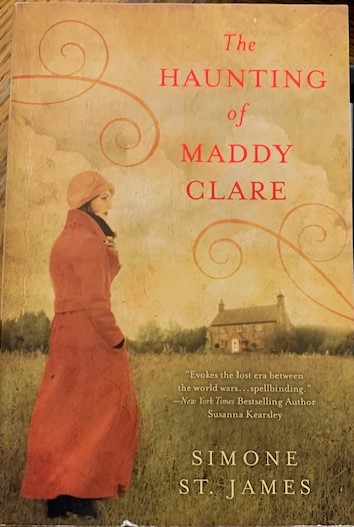
The Stuff: In 1920s London, Sarah Piper gets a call from the temporary agency that employs her. She must meet a man in a coffee shop for the details. Everything about this job screams no, but she is behind on the rent.
Wealthy Alistair Gellis proposes an outlandish assignment. Sarah is to travel to the country to see a ghost who hates men. This ghost has already bested a local vicar, and the landowner, Mrs. Clare, will not allow Gellis, or his usual assistant, Mathew Ryder, into the barn where she appears.
Maddy, Mrs. Clare says, can be mischievous and loves to play pranks, but she is not dangerous. She was a young girl who turned up one night, unable to speak, and filthy, having been abused. The girl worked for them as a maid until she hanged herself in the barn.
Thoughts:
This is a creepy story and a great page-turner. Maddy is one mean, scare-the-bejesus-out-of-you ghost. She can speak in another’s mind and show terrifyingly convincing hallucinations. The ghost is righteously pissed off and damned if someone isn’t going to pay for it.
On the negative side, there is the obligatory roll in the hay. We get to hear in detail about Sarah’s arousal (tell me all about it…) at the sight of a man who intrigues her but about whom she knows little, other than he received grievous injuries in the recent war.
Oh, ICK. No chance to fall in love or to get to know each other. And we get a play-by-play account of the sheet-side action. No room for the imagination. I know, it’s de rigueur, but come on. The encounter is titillation for the reader, completely without emotional depth. *snore*
Nevertheless, when the characters aren’t busy with each other, this is a good old-fashioned scary ghost story.
Many thanks to my friend Tracy who passed the book on to me.
Bio: Simone St. James is a Canadian author of mystery, historical fiction, and romance novels. According to the author’s blurb, St. James worked behind the scenes in the television industry for twenty years before leaving to write full-time. Her books include The Other Side of Midnight (2015), The Sun Down Motel (2020), and The Book of Cold Case (2022). She lives outside of Toronto with her husband and spoiled cat.
Title:The Haunting of Maddy Clare Author: Simone St. James First published: 2012
This week’s Saturday pizza and bad movie came by way of recommendation the dearly beloved and I watched: The Critical Drinker. He sugarcoated nothing. I do have warn anyone turning to his channel, he’s got a bit of a pottymouth. While his evaluations are frank, they’re more thoughtful than, “This sucks, man.” And they’re funny. I found little to disagree with him.
Plot:
In 1902, during the Second Boer War (1899-1902), the (fictional) Duke of Oxford (Ralph Fiennes), a Red Cross worker, arrives at a concentration camp run by his friend, Kitchener (Charles Dance). With him are his wife Emily (Alexandra Maria Lara) and his young son Conrad (Alexander Shaw). While Conrad waits in the buggy with the servant Shola (Djimon Hounsou), the Duchess of Oxford enters the camp, appalled at the condition of the inmates. They need medical attention.
Unbeknownst to them, a Boer sniper (Bevan Viljoen) lurks on the outskirts of the camp. He opens fire, killing Emily and wounding Oxford while little Conrad watches. Shola, in turn, kills the sniper.
Twelve years later, the Duke and Conrad (Harris Dickinson) arrive at the family estate by airplane. Conrad chafes at the Duke’s protectiveness; he wants to join up to fight with troops in the Great War (WWI, before it had a number), but he’s still too young to do so without he’s father’s permission. The Duke, a pacifist still mourning his wife’s death, is not about to grant that permission.
As father and son march up the steps into the mansion, the arrayed servants bow or curtsey, except Nanny Watkins. The Duke summons her into his study and warns her against displaying her special status in front of the other servants.
Hmmm….
But it’s not what you think.
Later, the Duke takes Conrad into town to get fitted for a suit at a tailor’s shop called the Kingsman. Here, he meets his old friend Kitchener. While the Duke and Kitchener talk shop, Conrad tells Kitchener’s aide-de-camp, Morton (Matthew Goode) that he’d like to join the grenadiers. Morton says he’ll see what he can do. In the meantime, Kitchener expresses concern about an old friend, Archduke Ferdinand. Would the Duke be willing to lend a hand protecting him?
In an unspecified other part of the world, Grigori Rasputin (Rhys Ifans) arrives by open manual evelvator at a cabin atop a flat rock butte. He’s late. He’s brought the Shephard a Fabergé egg in the likeness of his favorite goat. The Shephard slits the goat’s throat and, in a pronounced Scottish brogue, warns the assembled villains not to mistake fondness for weakness. In true supervillain mode, he then passes out signet rings complete with a secret compartment for a suicide pill.
Spoiler alert: the goat is avenged.
Thoughts:
I personally am not that fond of comic book/Marvel Universe stories. I find them entertaining at best, but not much more. That pretty much sums up my reaction to his movie. On the one hand, it brought up actual historical events, like the Zimmerman telegram, but it also distorted them and ripped them out of context in sometimes absurdist ways. For example, the French shot Mata Hari (Margaretha Geertruida MacLeod) as a spy in 1917. She never traveled anywhere near the White House and did not dance for, seduce, or blackmail Woodrow Wilson as depicted here.
The history isn’t meant to be taken seriously, of course. It’s meant to be absurd and amusing. If it has a broader purpose, it eluded me.
Perhaps nothing is more absurd than the confrontation with Rasputin. It accounts for what is supposed taken place during his brutal murder—poisoned, shot, and thrown into a river. There are varying accounts as to what actually happened. However, in the movie, he also table-dances, unwisely, on a pedestal table. The scene is fun and at times, amusing simply for its absurdity.
A public service note: Trying to build an immunity to cyanide by taking small doses of cyanide over a long period of time is a bad idea. Just sayin’.
The film also states that King George of England, Kaiser Wilhelm, and Tsar Nicholas of Russia were first cousins, all grandsons of Queen Victoria of England. They were related, but their relationships were more complicated than that. The Kaiser was depicted as a buffoon. While he may not have been the sharpest tool in the shed, he wasn’t quite the blithering idiot the movie portrays him as. (After the war, when the Kaiser and the Tzar have abdicated, King George muses, “Wilhelm, well, I suppose that was coming, but Nicholas…” He shudders at the thought of the assassination of the Russian royal family.)
The movie is based on The Secret Service/Kingsmen comic book series and serves as an origin story. It is the third film (Kingsman: The Secret Service (2014) and Kingsman: The Golden Circle (2017) with a fourth planned for release in 2023).
The King’s Man has been nominated by International Film Music Critics Award (IFMCA) for The Camera Operators Award. The camerawork is indeed stunning. The IFMCA also nominated it for Best Original Score for an Action/Adventure/Thriller Film. Frankly, I didn’t pay attention to the music, but I did notice the Tchaikovsky’s “1812 Overture.” It fit the over-the-top action in much of the film. A final nomination was SDSA Award for Best Achievement in Decor/Design of a Fantasy or Science Fiction Feature Film. The sets are fantastic throughout the film.
My feelings about the flick are mixed. Entertaining? Yes. History stinks. Absurdity—not off the scale, but pretty high. Fabergé egg brought to the supervillain’s lair? Table dancing? Swatting away a bomb with an umbrella? (How British) I enjoyed parts of it quite a bit, but I wouldn’t watch it again.
Because this is new, it’s not available for free download. We were able to get it from the library without hassle.
Title: The King’s Man (2021)
Directed by Matthew Vaughn
Writing Credits Matthew Vaughn…(screenplay by) & Karl Gajdusek…(screenplay by) Matthew Vaughn…(story by) Mark Millar…(based on the comic book “The Secret Service” by) and Dave Gibbons…(based on the comic book “The Secret Service” by)
Cast (in credits order) Djimon Hounsou…Shola Ralph Fiennes…Orlando Oxford Matthew Goode…Morton Charles Dance…Kitchener Alexandra Maria Lara…Emily Oxford Alexander Shaw…Young Conrad Bevan Viljoen…Boer Sniper Harris Dickinson…Conrad Oxford Gemma Arterton…Polly Rhys Ifans…Grigori Rasputin Valerie Pachner…Mata Hari Daniel Brühl…Erik Jan Hanussen Joel Basman…Gavrilo Princip Todd Boyce…Dupont Ron Cook…Archduke Franz Ferdinand of Austria Barbara Drennan…Sophie, Duchess of Hohenberg Max Count…Young King George Emil Oksanen…Young Kaiser Wilhelm (as Emil Okasnen) George Gooderham…Young Tsar Nicholas Alexa Povah…Queen Victoria Tom Hollander…King George / Kaiser Wilhelm / Tsar Nicholas Branka Katic…Tsarina Alix Alexander Shefler…Tsarevich Alexei Rosie Goddard…Grand Duchess Anastasia Dora Davis…Grand Duchess Maria Lucia Jade Barker…Grand Duchess Olga (as Lucia-Jade Barker) Molly McGeachin…Grand Duchess Tatiana Aaron Vodovoz…Felix Yusupov August Diehl…Vladimir Lenin Nigel Lister…Arthur Zimmermann Kristian Wanzl Nekrasov…General Ludendorff (as Kristian Wanzi Nekrasov) Stefan Schiffer…Ludendorff Butler Ian Kelly…President Woodrow Wilson