An older man in a gray frock coat waits in a storm for a coach. The rain runs down the back of his suit; he has neither luggage nor an umbrella. It’s St. John’s Eve, midsummer. The coach arrives. The driver, wrapped against the weather, appears to have no head. The man in gray boards, unhurried, indeed, almost disappointed. At least the mud hasn’t marred the exquisite polish of his shoes.
Among the other passengers is a woman dressed in furs and jewels—an easy draw for thieves, the man in gray surmises. The other passengers include a jovial man in corduroy with a handkerchief around his neck, a woman “of the people,” and a man who sits withdrawn in a corner and says little.
The man in the gray frock coat knows none of the others.
The man in corduroy greets him and says, “Well, mate! They’ve chosen a rare rough night to shift us on! Orders from headquarters, I suppose? I’ve been here nigh on a year and never set eyes on the boss.”
What a strange thing to say. What is he talking about?
“We used to call him God the Father,” the man in the gray frock says.”
Oh. A rather ostentatious name for a boss—particularly if these two men don’t know each other. Wait—are they dead? And they know it? Where is the coachman headed?
Thoughts:
The story is not frightening as much as it is sad. None of the passengers led a happy life. Most were unconnected in life, but one crucial connection is revealed. Yet, they realize they’ve left this world behind. Their ultimate destination is unknown.
The “woman of the people” was, in life, a baby farmer, something I was unfamiliar with. Baby farming was the practice of taking unwanted infants—for a fee—and raising them often in poor circumstances. The “woman of the people” admits to killing children for the convenience of their parents, like drowning unwanted litters of puppies or kittens. When everyone shrinks from her, she calls them hypocrites. She provided a vital service.
In my ten-minute internet search, I could find no customs that connect St. John’s Eve with death or the underworld. It’s dedicated to John the Baptist, born six months before Jesus of Nazareth (so the story goes). It is also associated with the summer solstice. In the days of yore, people often lit bonfires and had parties. I cannot discern its significance in the story. I am willing to be enlightened by any folklorist out there.
This story was an interesting, sad little read. If not in my top ten, it is still worth the time to see the perspective of the dead looking back on their lives.
Bio: Violet Hunt (legal name: Isobel Violet Hunt) (1866-1942) was a British novelist, short story writer, journalist, feminist, suffragist, and hostess. Her novels were feminist rather than supernatural, though she wrote two collections of supernatural short stories. Aside from her writing, she was well-known for her literary salons. She founded the Women Writers’ Suffrage League in 1908 and participated in the founding of International PEN (now known as PEN International), a writer’s group dedicated to literary freedom.
Oddly, I could not find a text version of this story.
Title: “The Coach” Author: Violet Hunt (legal name: Isobel Violet Hunt) (1862-1942) First published: The English Review, March 1909 Length: short story
Montresor tells the reader that he had borne the injuries from his friend Fortunato as best he could, but when Fortunato insulted him, he vowed revenge. He kept up the pretense of friendship until he could exact his revenge—and he would do so with impunity.
Fortunato’s weak point was his belief in his connoisseurship of wine. Montresor accidentally runs into him during the carnival. Fortunato is dressed as a jester—or fool— in a hat with bells that jingle.
Oh, the irony.
Montresor tells him he’s happy to meet him. He’s come into a bottle of what proports to be Amontillado, but he has doubts.
Fortunato is only too happy to sort it out for him.
“My friend, no; I will not impose upon your good nature. I perceive you have an engagement. Luchesi—”
“I have no engagement;—come.”
Oh, but Fortunato has a cold, and the vaults are damp—
“Let us go, nevertheless. The cold is merely nothing. Amontillado! You have been imposed upon. And as for Luchesi, he cannot distinguish Sherry from Amontillado.”
So they go, Montresor protesting and Fortunato insisting all the way.
Thoughts:
What terrible insult Fortunato offered Montresor, the reader is never told. It must have been a doozy. The strength of the story is how Montresor reels his prey in, all the while pretending to object.
Fortunato could turn back at several places, but he refuses. He wants to try this wine. He wants to offer his opinion to his friend. Maybe it is the real thing? Then he’ll have the chance to drink some fine wine. If it is not, then he can display his superior knowledge.
Poe creates an eerie atmosphere in the “vaults,” the catacombs or burial place for Montresor’s large family. Its coolness would provide a practical reason to store wine despite its lack of ambiance. They see bones. They also see white “nitre” (potassium nitrate)* along the walls. Oh, dear, is it irritating Fortunato’s cough? Perhaps we should turn back…?
Nah. Let’s keep going.
As with many Poe stories, everything leads up to the ending. Even the motto on the Montresor family crest reads (in Latin, thank you very much), “No one harms with impunity,” and a picture of a snake biting a heel only to get stepped on.
This short story is often read in schools in the United States, possibly because of its brevity and its psychology. Montresor plays Fortunato like a fiddle.
*A mineral that can leech from water into bricks or other building materials if water moves behind them.
Bio: Edgar Allen Poe (1809-1849) was the son of two actors. After his father deserted the family and his mother died of tuberculosis, two-year-old Edgar was taken in by the wealthy Allan family. He briefly studied at the University of Virginia and West Point. His most well-known works include “The Tell-Tale Heart,” “The Black Cat,” and “The Murders in the Rue Morgue.” The last is sometimes cited as the first detective story. The work that made him a household name in his day was the poem “The Raven.”
The circumstances of his death are still unclear. He was found in a tavern, appearing drunk, wearing someone else’s clothes, and died some days later in Washington University Hospital. According to the Poe Museum, twenty-six different theories regarding the cause of his demise have been published. Poe was a known tippler and, while alcohol poisoning is a perennial favorite cause of death, other plausible causes are as disparate as rabies and cooping, a 19th-century form of voter fraud.
Title: “The Cask of Amontillado” Author: Edgar Allan Poe (1809-1849) First Published: Godey’s Magazine and Lady’s Book, November 1846 Length: short story Series: Fortunato
Carnacki recounts his adventures at (fictional) Iastrae Castle, some twenty miles northeast of Galway, Ireland. Mr. Sid K. Tassoc, the new owner, requested his help after finding the castle haunted. He bought the castle, intending to renovate it before marrying and bringing his bride to live there. He’s frustrated because sounds—whistling and sometimes screaming—come from one particular room, seemingly without rhyme or reason. He can’t bring his bride-to-be home to that.
On the first instance of hearing the whistling, Carnacki enters the room, followed by Tassoc and his brother, all holding their candles high. They see nothing, but in the racket, it seems the room itself is rocking. As Carnacki later tells his fellows, it was as if he heard a voice telling him, “Get out of here—quick! Quick! Quick!” He tells the others to leave immediately.
A scream follows their retreat and then, like a clap of thunder, dead silence.
The party retreats downstairs for whiskey.
Thoughts:
On the one hand, this is a classic ghost mystery. The ghost has plenty to be pissed off about, though those who harmed him have long since gone on to their reward.
The narrator spends a lot of energy trying to explain that the events were worse to experience than the description may suggest. On entering the Whistling Room the first time the noises start, he tells his friends at the club, “It was as if someone showed you the mouth of a vast pit suddenly, and said:—That’s Hell. And you knew that they had spoken the truth. Do you get it, even a little bit?”
However, the revelation of the ghost was so absurd that I could not buy it. I’d followed up to that point but was lost there. It made me wonder how much whiskey he and his buddies were downing at that castle.
The character Carnacki is an occult detective whose tales are often related in “club stories,” a framing device of (usually) one member of a group of friends in a safe and comfortable place, relating his adventure in a far-off land or some unusual and dangerous circumstance. The typical place is a nineteenth-century men’s club with one member regaling the others with his tales of adventures to Solomon’s Mines, snipe hunting, or some such, but the definition is broader than that.
Hodgson published five Carnacki stories beginning in 1910. A few appeared posthumously. Since then, several others have used the character and continued the series.
I really wanted to like this tale.
Bio: William Hope Hodgson (1877-1918) ran away to sea at a young age and spent nine years as a merchant marine. His experiences at sea affected his writing and poetry. His occult detective, Carnacki, through the force of science, often found rational explanations for odd phenomena—but not always. The short story “Voices in the Night” is regarded as one of his strongest. H. P. Lovecraft praised his novel The Borderlands—conditionally. Hodgson was killed in battle at Ypres in 1918.
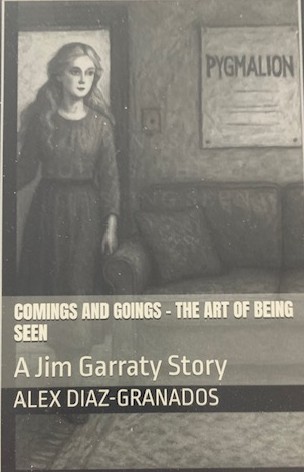
Full disclosure: The author of this short story is a netbuddy of mine going back to sometime in the early aughts. We “met” on the (alas!) defunct site Epinions some twenty-odd (many of them quite odd) years ago.
The Stuff:
At a party where Jim is more observer than participant, a young woman approaches him and asks him, “You’re not having a good time, are you?” Feeling dejected, disliking his beer, which by now has grown warm, Jim is struck by the confidence of the woman who introduces herself as Kelly. Kelly listens and does not push, mock, or judge (other than to call Budweiser “horse piss.”) She sees, something Jim, invisible up to that point, is grateful for.
The story is not a romance, but rather an enjoyable, insightful journey into empathy and the importance of human connection. It portrays the gift of intimacy set against a backdrop of alienation—college, often one’s first time away from home. The author adds music to the narrative, not only to evoke the 1980s (UGH), but also to enhance the conversation between Jim and Kelly.
In short: The book has an engaging writing style and is a quick, easy read. However, it is too short to do the subject justice and suffers from oversimplification and insufficient information.
My first impression of this book, with its 188 pages of text, was that it was too short to do its subject justice. It is also my final impression. It seems, at times, hastily written, and the author is selective in what material she chooses to present. The entire book, including a perusal of its notes and bibliography, could be read over a rainy weekend.
The book contains eleven chapters, ten covering a particular period of the history of Christianity and the eleventh a conclusion: “Seeds of Tyranny,” “Political Maneuvering: Making Christianity Palatable to the Romans,” “Deciding Upon Doctrine: Sex, Free Will, Reincarnation and the Use of Force,” “The Church Takes Over: The Dark Ages,” “The Church Fights Change: The Middle Ages,” “Controlling the Human Spirit: The Inquisition and Slavery,” “The Reformation: Converting the Populace,” “The Witch Hunts: The End of Magic and Miracles,” “Alienation from Nature,” “A World Without God,” and the conclusion.
The preface opens with a quote from Pope John Paul II about the millennium being a good time for the Roman Catholic Church to reflect on its “dark history.” Barely a paragraph below it, the author writes about an acquaintance who spoke of the Christian church as embodying all that is best in Western civilization and seemed entirely unaware of the history of violence and oppression committed by not only individual Christians but by Christian institutions. That the author, as well as the Pope, was attempting to remedy this ignorance seemed to me a good and hopeful sign and was actually the reason I decided to read the book.
The title is a fair warning that the author is not about to present an unbiased history of the church, which is certainly not required for either an interesting or informative read. Her main thesis is stated early and repeated often: The belief in one supreme being leads to oppression because it demands hierarchy and conformity.
“The dark side of Christian history was not an unavoidable result of human nature,” Ellerbe concludes, “It was the result of a very specific ideology and belief structure.”
*WARNING* A BIT OF GROUSING AND PEDANTRY TO FOLLOW *WARNING*
While she does not argue that polytheism leads to egalitarianism, she does posit that seeing the many aspects or faces of god(s) can bring about social justice, sexual and racial equality, and peace with one’s neighbors because such a system is more open to power sharing. In this, she ignores the many hierarchical polytheistic societies past and present. For example, the classical polytheistic societies of Greece. Even classical Athens, the putative cradle of Western democracy, practiced slavery and sequestered (respectable) women.
The belief in a single supreme being may be responsible for some of the woes we humans tend to inflict on each other but viewing how widespread the practice of human sacrifice has been through time and across geography—Aztecs slaughtering prisoners of war to feed the sun with their hearts, for example—I don’t see that belief in many gods does much better.
Quotes from people as diverse as sharp-tongued Tertullian, the “Father of the Latin church,” and physicist Stephen Hawking fill The Dark Side of Christian History. It makes for delicious reading at times.
However, I got the impression that Ellerbe probably has read few of the passages in their original context. To my dismay, I noticed a quote attributed to St. Cyril of Alexandria (the learned Hypatia of Alexandria was murdered during his bishopric, possibly with his—at least—tacit consent) sourced in contemporary writer Riane Eisler’s The Chalice and the Blade. Eisler was born in 1931. I doubt she has had any conversations with a 4th-century CE North African bishop lately. I would have dug out Eisler’s book to check, but I lent it to a friend who didn’t see fit to return it. So, what is the ultimate source of the Cyril quote?
When Ellerbe deals with any historical person, she presents only one side of them. For instance, she portrays Isaac Newton as the discoverer of the laws of gravity, who deprived the world of magic (so her argument goes), which in turn alienated Europeans from nature. This simplification overlooks that Newton was a mystic and an alchemist who held a heretical view of the nature of god. Such information would apparently—complicate things.
Another huge omission is the history of the Eastern Orthodox church. The few paragraphs devoted to Byzantium note that the Crusaders decided to sack the city between home and the “holy land.” The author does not deal with Orthodox religious issues.
The writing is clear and straightforward, avoiding purple passages even when recounting the horrors of the Inquisitions and witch-finding. However, the author recounts large numbers of victims in those horrors without qualification or hesitation.
On page 95, she cites the number of Protestants (Huguenots) killed in the St. Bartholomew’s Day Massacre in France in 1572 unequivocally as 10,000. The Catholic Encyclopedia (granted, not an unbiased source) numbers the dead in Paris as 2000 but states, “The number of victims in the provinces is unknown, the figures varying between 2000 and 100,000.” While Ellerbe put her figure toward the low end of the possible total, the problem is—IMseldomHO—that she pretends certainty where there is none. I’m sure this is for the sake of simplicity, but as a reader, I’ve handled reading about the suffering of people being tortured, burned alive, or drowned. I can handle a little uncertainty, particularly when it speaks to careful research on the part of the author.
END OF MOST OF THE GROUSING AND PEDANTRY
Finally, at the end of this extremely long review (for which I ask the reader’s forgiveness, assuming any have made it this far), I can only marginally recommend this book. It is perhaps a good starting place, but there is so much left out and so much sacrificed for simplicity that I felt cheated. As for the author’s thesis (polytheism leads to harmony; monotheism to hierarchy and patriarchy), I didn’t buy it for a moment, but the subjects she brings up bear some study. The millennium is twenty-five years old now and her book about thirty, but it’s always a good time to reflect on the past to learn from mistakes made before us in order to work on creating a world where, as Ellerbe puts it, “we can embrace the hope and pursue the dream that humanity can be free to act humanely.”
Bio: I could find little info on the author. She was raised in the Episcopalian tradition. At the time of the book’s publication, she was a researcher, writer, and public speaker living in the San Francisco Bay Area.
Title: The Dark Side of Christian History Author: Helen Ellerbe First published: 1995 Length: non-fiction book
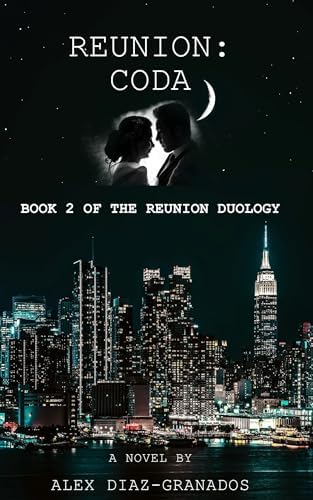
Full disclosure: The author and I have been netbuddies for twenty years (YEE GADS!), first “meeting” at the defunct review site, the late great Epinions.
This novel is a lyrical story of new love interwoven with a story of acceptance of love lost and self-forgiveness. In his mid-thirties, Professor Jim Garraty is lucky in many ways. His dream of teaching history has come true. His books enjoy mild success. At the same time, he’s smarting from a painful divorce.
One evening, as he’s enjoying a drink at a bar, a woman with a full book bag approaches him and asks, “Is this seat taken?” She’s a stranger, but there’s something familiar about her, something that summons memories from long ago.
Alex writes in lush tones, where New York City’s winter gray skies give way to warmth inside apartments. The sun casts long, golden rays and deep shadows. Big band and orchestral music play large roles in the book, setting the mood for joy and reverence.
Another theme is regret over bad choices, missed opportunities, and forgiveness for falling short.
The story is richly textured and enjoyable.
Title: Reunion: Coda: Book 2 of the Reunion Duology Author: Alex Diaz-Granados First published: April 2025 Length: novel
Our Saturday night pizza and bad movie offering was an adaptation of a Jules Verne novel with stop-motion special effects of Ray Harryhausen. It brought me back to many Saturday afternoon movies back in the day.
Plot:
The opening scenes depict a storm at sea, but a scene title tells us the action takes place during the siege of Richmond, Virginia, 1865, which took place on land. But don’t worry. We’ll get to the sea—and it will be stormy.
Captain Cyrus Harding (Michael Craig), Corporal Neb Nugent (Dan Jackson), and Herbert Brown (Michael Callan) are Union soldiers held as prisoners of war near the Confederate capital of Richmond, Virginia. They plan to escape via a hot air balloon that the Rebels use for observation.
Yeah, it could work. Good thing the Confederates are such lousy shots.
Along the way, they snag a captured journalist, Gideon Spilitt (Gary Merrill), and a Johnny Reb, Sergeant Pencroft (Percy Herbert). Sgt. Pencroft is about to be tossed out of the basket until the others realize he’s the only one who can pilot the balloon.
After four days, our heroes find themselves over water—could it be the Pacific? Uh-oh… problems with the valve on the balloon. And then a storm hits. Is that the sound of a tear? And hissing? Is that land? Will they make it?
The balloon ditches, and our heroes swim.
The next morning, after the storm has passed, they wake up on a tropical island beach. Captain Harding is missing, but they eventually find him next to a fire he did not set. How could he, without matches?
Thoughts:
The film is loosely based on Jules Verne’s 1875 book The Mysterious Island (original French: L’Île mystérieuse). It’s been translated into English several times with changes of names and a couple of changes of characters.
The book (and the movie) draws material from Twenty Thousand Leagues Under the Sea and In Search of the Castaways by Jules Verne, The Swiss Family Robinson by Johann David Wyss, Robinson Crusoe by Daniel Defoe, and Treasure Island by Robert Louis Stevenson.
The five men search for food and build themselves shelters. The oysters are about the size of footballs. On their way to a hot spring for a much-needed soak, our heroes encounter a crab the size of a Greyhound bus. It picks up Neb in its pincer.
With some organization, our heroes start building a boat to travel home in.
Two more castaways arrive on the islands, women this time. A sea chest washes ashore, packed with useful things, almost as if someone knew what they needed…
Along the way, our heroes battle not only the giant crab but also a giant chicken—or a flightless bird of some sort? The Volkswagen-sized bees, however, still fly. No adventure on a South Sea Island would be complete without discovering a diary and an attack by pirates.
They find a cliffside dwelling they dub “Granite House,” accessed by hanging vines. Comely young Elena Fairchild (Beth Rogan) exchanges her proper Victorian dress for something out of the Cavegirl summer catalogue without a single hair ever wandering out of place. Young Herbert likes the new look.
The viewer glimpses the lush, Victorian interior of the Nautilus and listens as Captain Nemo (Herbert Lom) describes his new idea for ending wars, one that he believes is superior to his old idea of merely sinking military ships.
The juxtaposition of the violent pacifist Captain Nemo and the American Civil War is interesting, though it’s left all but unexplored in the film. This was entertainment after all.
It will not be to everyone’s taste, but I found it fun. If this is a not-entirely believable little adventure story, it is at least worth a grin for watching an interesting way to cook a crab.
Writers John Prebble…screenplay & Daniel B. Ullman…screenplay (as Daniel Ullman) & Crane Wilbur…screenplay Jules Verne…novel
Cast (in credits order) Michael Craig…Capt. Cyrus Harding Joan Greenwood…Lady Mary Fairchild Michael Callan…Herbert Brown Gary Merrill…Gideon Spilitt Herbert Lom…Captain Nemo Beth Rogan…Elena Fairchild Percy Herbert…Sgt. Pencroft Dan Jackson…Cpl. Neb Nugent Harry Monty…Pirate(uncredited)
For our Saturday pizza and bad movie, we enjoyed a return to the classics—a Kaiju flick that managed to squeeze in an alien invasion.
Plot:
The World Space Authority is sending two astronauts, Glenn Amer (Nick Adams) and K. Fuji (Akira Takarada), to explore the newly discovered Planet X, located beyond Jupiter. (… maybe wedged in between it and Neptune? No one says.) Before they leave, Fuji scolds his sister, Haruno (Keiko Sawai), because she’s seeing the inventor Tetsuo Teri (Akira Kubo), a nerd with thick black-rimmed glasses who hasn’t sold a single invention so far. How will he support his sister in the style to which she’s become accustomed?
However, while the two astronauts are in space, a charming Miss Namikawa (Kumi Mizuno) shows interest in a particularly annoying alarm clock Tetsuo has developed. Miss Namikawa is also dating Glenn. Unlike Haruno, who gazes modestly toward the ground when speaking to men, Miss Namikawa looks them in the eyes. She wears lots of makeup and tight dresses. Hmmmm…. Could she be a fast woman? Could she have ulterior motives for purchasing Tetsuo’s device?
Glenn and Fuji find that Planet X is inhabited by people forced to live underground. A three-headed dragon, King Ghidorah (Shôichi Hirose), flies around the planet, blowing up things. The Controller of Planet X (Yoshio Tsuchiya) welcomes our heroes and asks only that they allow Godzilla (Haruo Nakajima) and Rodan (Masaki Shinohara) to come to Planet X to defeat King Ghidorah. In return, the inhabitants will give the people of Earth a formula for the treatment of all diseases. (In the original Japanese, they promise a cure for cancer.)
The Controller and all inhabitants dress identically: black, fitted leather shirts and helmets, with a neck wrap and a plastic band over their eyes, which must have made seeing difficult.
What a bargain! The Earth astronauts have to return to Earth to ask permission first, though.
Will Godzilla and Radon never threaten Tokyo again? Will the people of Earth find a cure for what ails them? Or will this be another case of what your mama told you: if something sounds too good to be true, it probably is?
Thoughts:
This goofy film is, first and foremost, a lot of fun unless the viewer is expecting something like reality. The two astronauts (in the Japanese version don’t even speak the same language) seem to be good friends. They exchange hand gestures and grins. The only villain to speak is the Controller. He also has a great villain laugh. The bad guys all dress alike—and weirdly. I half-expected them to break out in a Devo song.
The special effects have high hopes. The bad guys find Godzilla at the bottom of a lake and fish him out. They find Rodan snoozing in a rock formation and break him out. They transport the monsters back home in giant bubbles attached to their spaceships by buzzing tractor beams.
And then there are their spaceships. On the outside, they look kind of like the spinning tops I had as a kid, except they’re white and appear inflatable. On the inside, they look kind of like stage spaceships. The bad guys control them by brain waves. And they can haul monsters from Earth to Planet X beyond Jupiter.
Once on Planet X, there is the monster smackdown, complete with Godzilla roars and bangs, rockfalls, etc. Godzilla even performs a victory dance:
from YouTube
Apparently, it was born of an effort to make the monster more kid friendly. The moves came from a character named Iyami from a manga titled Osomatsu-kun. It’s a thing of controversy among the Godzilla fanbase because it is so goofy and reputedly despised by the original creator of the beast. I just think it’s silly.
While I know these types of movies aren’t everyone’s cup of tea, I found it delightful fun.
Unfortunately, I could not find this gem available for streaming for free, but places like YouTube will rent it or sell it to you. Max will let you watch it if you want to subscribe. If you’re lucky, maybe you can find it at your library.
Title: Godzilla vs. Monster Zero (AKA Invasion of Astro Monster) 1965 original: Kaijû daisensô
Director Ishirô Honda (as Inoshirô Honda)
Writer Shin’ichi Sekizawa
Cast (in credits order) Nick Adams…Astronaut Glenn Amer (as Nikku Adamusu) Akira Takarada…Astronaut K. Fuji Jun Tazaki…Dr. Sakurai Akira Kubo…Tetsuo Teri Kumi Mizuno…Miss Namikawa Keiko Sawai…Haruno Fuji Yoshio Tsuchiya…Controller of Planet X Haruo Nakajima…Gojira Masaki Shinohara…Rodan Shôichi Hirose…Kingugidora
Released: 1965 Rated: G Length: 1 hour, 33 minutes
This young adult novel follows the fortunes of several gay boys and young men. A Greek chorus of gay men who died during the AIDS crisis serves as the narrator. They cannot interact with the living. Peter and Neill are a couple still in high school who have been dating for a while. Avery and Ryan meet at a gay prom (the Greek chorus looks on, delighted that such a thing is possible these days). They’re just finding out about each other. Tariq recalls a time he was beaten up outside a theater—not for being black. His assailants called him a “faggot.” There were even black guys among them. He wonders—what did he do wrong? Cooper stays up late, cruising sex/dating sites and chatting with older men. He had not yet met any of them.
And then there are Craig and Henry. They are no longer going out, but they’ve remained friends. They decided to try to break the Guinness Book of World Records record for the longest kiss—something more than thirty hours. Craig wanted to protest after he saw Tariq in the hospital, but he didn’t know how. Breaking the Guinness Book of World Records for kissing another boy is his way.
Thoughts:
In his author’s notes, author David Levithan writes about two college students, Matty Daley and Bobby Canciello, who kissed for thirty-two hours, thirty minutes, and forty-seven seconds in September 2010 to break the Guinness World Record. He admits the characters are not based on Daley and Canciello but were inspired by them. He further thanks Daley for telling him what it was like.
It comes as little surprise that this book, aimed at young audiences and dealing with LGBT+ themes, has been challenged and banned. According to the American Library Association (ALA), it was the 18th most frequently banned book between 2010-2019. There is no explicit sex. While there is a lot of kissing, talk of sex, arousal, and a suicide attempt, it is mostly romance. In my cynical heart of hearts, I might say the romance is often idealized, but be that as it may, I can’t imagine there’d be any squawking if the characters were straight.
The device of the ghosts of a past generation as narrator(s) adds poignancy. They don’t all speak as one voice all the time but often speak with “we.” “We” have seen something happen before, but “we” can’t know how it will turn out. They want to help but are powerless to make things easier for the young men they watch. They also realize, to borrow a phrase, that the kids are all right.
The book was shortlisted for the 2013 National Book Award for Young People, nominated for the 2014 Stonewall Book Award for Children’s & Young Adult Literature, and nominated for 2014 for The Inky Awards for Silver Inky.
As far as young people reading a book, my inclination is to let anyone curious enough to read it read it. If you are a parent and don’t want your children reading a particular book, I support your right to do so. You are the mommy or the daddy. However, I don’t believe you have the right to determine whether the kids down the block have access to the same book.
And for the book in question, I can’t imagine myself—were I a parent—forbidding my child (straight or gay) to read it. It is, all said and done, a sweet book.
Title: Two Boys Kissing Author: David Levithan (b. 1972) First published: 2013 Length: novel
For our Saturday night pizza and bad movie selection, we chose a flick that started with a ghost story around a campfire.
Plot:
As midnight nears before the centennial of the founding of the northern California seaside town of Antonia Bay, old Mr. Machen (John Houseman) sits with a group of kids around a campfire. He tells them of the wreck of the old sailing ship, Elizabeth Dane, and how she was led to her destruction in a fog by a campfire the crew mistook for a lighthouse. Now, sailors tell of the men at the bottom of the sea who rise when the fog rolls over Antonio Bay to find the campfire that lured them to their deaths.
Sleep tight, little guys.
Once the clock strikes midnight, several odd things happen. A glowing fog appears on the horizon over the bay. Weatherman Dan O’Bannon (Charles Cyphers) picks up fog on his radar and warns DJ Stevie Wayne (Adrienne Barbeau) about it and a fishing vessel called the Sea Grass in its path. (He has a really good radar, I guess). Stevie broadcasts from a lighthouse to warn the Sea Grass of the incoming fog.
Something of an earthquake strikes, knocking bricks loose from a church wall. Episcopalian priest Father Malone (Hal Holbrook) discovers the journal of his grandfather (another Father Malone). He realizes where the money came to found not only his church but the whole town. His grandfather misbehaved in some pretty serious ways.
It does not look good for any of the town fathers—oh, irony!—and just when Antonio Bay is getting ready to celebrate its 100-year anniversary.
The crew of the Sea Grass is drinking heavily. For shame! They hear Stevie’s warning but see no fog until—out of the fog, a massive 19th-century sailing ship nearly rams them. What the hell? Silent figures board Sea Grass and slit the throats of the unsuspecting crew with what appear to be hooks. It’s terrifying to watch.
Murdering the innocent (if loaded) crew doesn’t satisfy the ghosts’ thirst for vengeance. They’re looking for descendants of those who murdered them, and they work their way ashore in the glowing fog, where they wreak havoc and leave a trail of corpses.
Thoughts:
The opening screen flashes an epigram from an Edgar Allen Poe poem:
“Is all that we see or seem but a dream within a dream?
I’m not sure of its relevance. The poem (…I think?) speaks of how fleeting life is, and the movie depicts sailors who hold a grudge and visit the iniquity of the fathers upon the children and other bystanders a hundred years after their demise.
Overall, my feelings about this flick are mixed. Moments of genuinely scary stuff are tossed in with some tedious melodrama. Additionally, there’s the tired trope of not daring to have sex if you’re in a horror flick. Not to be overlooked is the obtuse town elders, who insist on going through with one thing that will ensure disaster descends on the town despite all the warnings by people who know better.
A lot goes on; several story threads work their way through the tale. The ghosts/zombies are out for vengeance and won’t be put off. The people they hunt down have done them no harm but have benefited from the wrong the ghosts suffered. Unanswered at the end is the question of whether the ghosts are satisfied—will they be back for more when the fog rolls in again?
Some of the special effects work nicely, but others don’t. The viewer never really gets to see the ghosts/zombies. The fog on TV doesn’t really look like fog in real life. It might on the big screen. Yet, it is creepy. Seeing the silhouette of some guy standing outside the door in the fog, holding a sharp object, is enough to raise the hair on the back of anyone’s neck. Where are the lights coming from? Probably not car headlights.
The Fog was a 1981 nominee for the Saturn Award for Best Horror Film and Best Special Effects from the Academy of Science Fiction, Fantasy & Horror Films. John Carpenter won the 1980 Critics Award at the Avorias Fantastic Film Festival (France) and was nominated for the Grand Prize from the same film festival.
Unfortunately, I couldn’t find it anywhere to stream for free. Amazon Prime will show it to you with a subscription. YouTube will rent or sell it to you.
Title: The Fog (1980)
Directed by John Carpenter…(directed by)
Writing Credits John Carpenter…(written by) and Debra Hill…(written by)
Cast (in credits order) Adrienne Barbeau…Stevie Wayne Jamie Lee Curtis…Elizabeth Solley Janet Leigh…Kathy Williams John Houseman…Mr. Machen Tom Atkins…Nick Castle
Released: 1980 Length: 1 hour, 29 minutes Rated: R





 Reviews of Old and New Stories. Mostly Old