
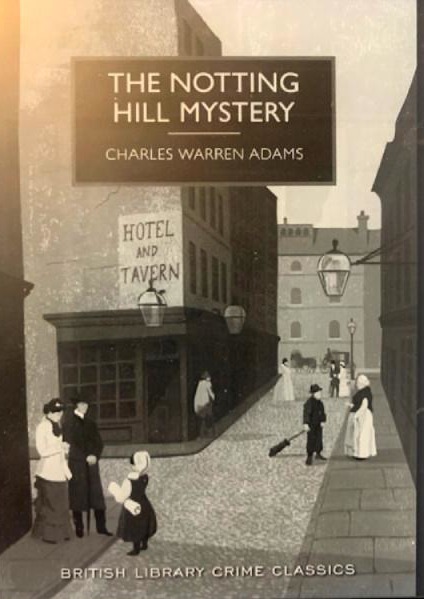
Plot:
In January of 1858, insurance agent Ralph Henderson finally sends his report to the secretary of the — Life Assurance Association he works for. He is investigating the death of one of the insured, Madame R**. Her husband, Baron R**, has a policy for her for £ 5,000 (?). He had four such policies with other insurance agencies in four other cities. She died in March 1857 after ingesting some acid while sleepwalking.
…nah, nothing suspicious here.
“Before entering upon the subject of my investigation, it may be well to recapitulate the circumstances under which they were originated,” Henderson tells the main office.
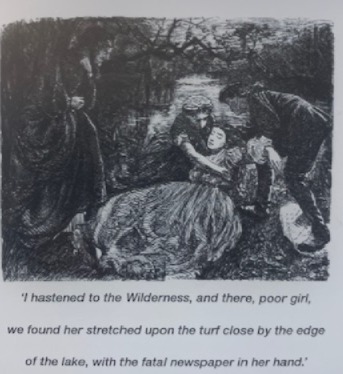
For that, Mr. Henderson takes the reader back to a series of letters written beginning in 1832 that detail the unfortunate death in childbirth of one Gertrude Boleton, and the birth of sickly twin daughters, Gertrude and Catherine. Before her labor started, Gertrude Boleten had been found clutching a newspaper bearing the news of her missing husband’s death by duel in Dieppe (France).
The twins appear to have a sympathetic connection, passing ailments between them. The elder, Gertrude, seems more adversely affected.
With both parents deceased, they are placed in the care of a poor but honest Mrs. Taylor, who (Mr. Henderson believes) genuinely cares for them. One day, when the girls are about six years old, a band of “gipsies” [sic] steals little Catherine.
Yeah, it could happen.
That’s not the last the reader hears of poor Catherine.
Thoughts:
This book is considered the first detective novel in the English language, first serialized in Once a Week magazine from November 1862 to January 1863. It was then published in book form in London in 1865. Illustrations were by George Du Maurier (1834-1896), the author of Trilby (1894), and grandfather of Daphne Du Maurier (1907-1989), of Rebecca (1938) fame. Small world.
It resembles Wilkie Collins’ The Woman in White (1868) both in plot and in format: a series of depositions, statements from various characters, documents, and newspaper clippings. Ralph Hnederson, insurance investigator extraordinarie, writes notes and summaries of events and evaluates evidence.
While this may sound dry, the reading is actually quite easy. One has to make allowances for the Victorian language—why use a single word when an indirect phrase will do?
The idea of sympathetic mesmerism—hypnosis by proxy—as far-fetched as it sounds now, might more easily earn a listen from serious thinkers at the time. The text mentions an article on the matter in a periodical called Zoist, which existed and covered topics such as mesmerism. In the article, a man hypnotizes a starving woman, who then feels fed after he eats by her bedside while she is under hypnosis.
Yeah, it could happen.
The plot is convoluted, and there are a lot of characters to keep track of, but it’s an interesting read even if there are no car chases, shoot-outs, or Agatha Christie reveals in the drawing room. I found the ending unsatisfactory, but what’s a humble insurance investigator to do?
If you enjoy old-fashioned mysteries, this should interest you.
Bio: Charles Warren Adams (AKA Charles Felix) (1833-1903) was an English lawyer, publisher, and anti-vivisectionist.
Title: The Notting Hill Mystery
Author: Charles Warren Adams (AKA Charles Felix) (1833-1903)
First published: 1865
Length: novel
 Reviews of Old and New Stories. Mostly Old
That sounds fascinating. The first detective novel!
Thanks for your note. It was an interesting read.