A note: This collection of oral histories relates various accounts of violence and social upheaval, including wartime atrocities, antisemitism, suicide, including the suicide of a teenager, and murder. It is a difficult read and most definitely not one for the kiddies.
The Stuff:
Author Svetlana Alexievich divided her collection of oral histories into two broad groups. The first group deals with narratives from 1991 to 2001, and the second from 2002 to 2012. These are prefaced by a helpful timeline of Russian history beginning with Josef Stalin’s 1953 death and ending in 2016, and an introductory “Remarks from an Accomplice.” The last is unsigned, but I feel safe in assuming the author wrote it.
The “Remarks” discusses several recurring themes in the oral histories. Alexievich mentions that she asked everyone she met what “freedom” meant. “Fathers and children had very different answers. Those who were born in the USSR and those born after its collapse do not share a common experience—it’s like they were from different planets.” (p. 5)
Occasional nostalgia for the Soviet Union appears, not because times were so much better then but because the present time is so uncertain.
One elderly man recalls seeing a Bolshevik for the first time (pre-Russian Revolution): “[he told us] everyone would live like brothers and sisters, everyone would be equal. How can you not fall in love with a dream like that? Poor people, people who had nothing, believed the Bolsheviks. They won the support of the youth. We walked through the streets crying, ‘Melt down the church bells! Turn them into tractors!’” (p. 172)
The author herself, however, holds no such soft spot for Communism. “Perhaps it was communism’s only achievement. Seventy-plus years in the Marxist-Leninist laboratory gave rise to a new man: homo sovieticus. Some see him as a tragic figure, others see him as a sovok.” In a footnote, the author explains: “Sovok is a widely used pejorative term for one who adheres to Soviet values, attitudes, and behaviors. The word can also refer to the Soviet Union itself. It is a pun on the word for ‘dustpan.’” (p. 3)
The stories are universally of loss, despair, confusion, and isolation. A mother receives her police deputy daughter’s remains from the war in Chechnya with the official notice that her daughter died by suicide. The mother defies the instructions not to open the coffin, as within is a mess. She finds not a “mess,” but the gunshot wound on the opposite side of the head the authorities described. What else have they lied or misinformed her about?
Yet, at times the writing is beautiful, if stark. One interviewee, resettled as a child from Poland into Siberia, told the author:
My older sister Vladya recalled how surprised I was when I learned that goats don’t talk like we do, I was confused, I thought they were our equals. We shared a world, it seemed indivisible. I still don’t feel the difference between us, I still don’t feel the distinction between man and animal. I talk to them…they understand me…such colorful beetles, as if they’d been painted. My toys. In spring, we’d go out into the sunshine together, crawling through the grass in search of food. Warming ourselves. In winter, we’d go dormant like the trees, hibernating from hunger. I had my own school, humans weren’t my only teachers. I can hear the trees and the grass too. (p. 226)
And this chilling warning: “There is nothing more terrifying than an idealist.” (p. 295)
Thoughts:
At times, I wondered if the author had, well, embellished certain points. Some stories are just breathtakingly terrifying. A few interviewees confess. People who had been tortured in the most grisly ways, or lost loved ones in the prison system, return home and, after glasnost and perestroika, see the neighbors who had tortured them. Is there an Emily Post column about the proper etiquette in such situations?
I accept that the author edited the interviews. No one, I believe, takes the interviews written here as word-for-word transcripts. Some editing is necessary for clarity, to perhaps trim down repetition or filter out bad grammar or correct mistakes.
Some discussion is here.
Secondhand Time won the 2015 Nobel Prize for Literature. It is also a New York Times Bestseller, and #72 on the New York Times Best One Hundred Books of the 21st Century list.
While the stories are important for the historical record, they are very depressing, with no reprieve. No one offers a solution. Few believe there is a solution. The best one can hope for is to cultivate one’s garden. Let the world go to hell, because it is.
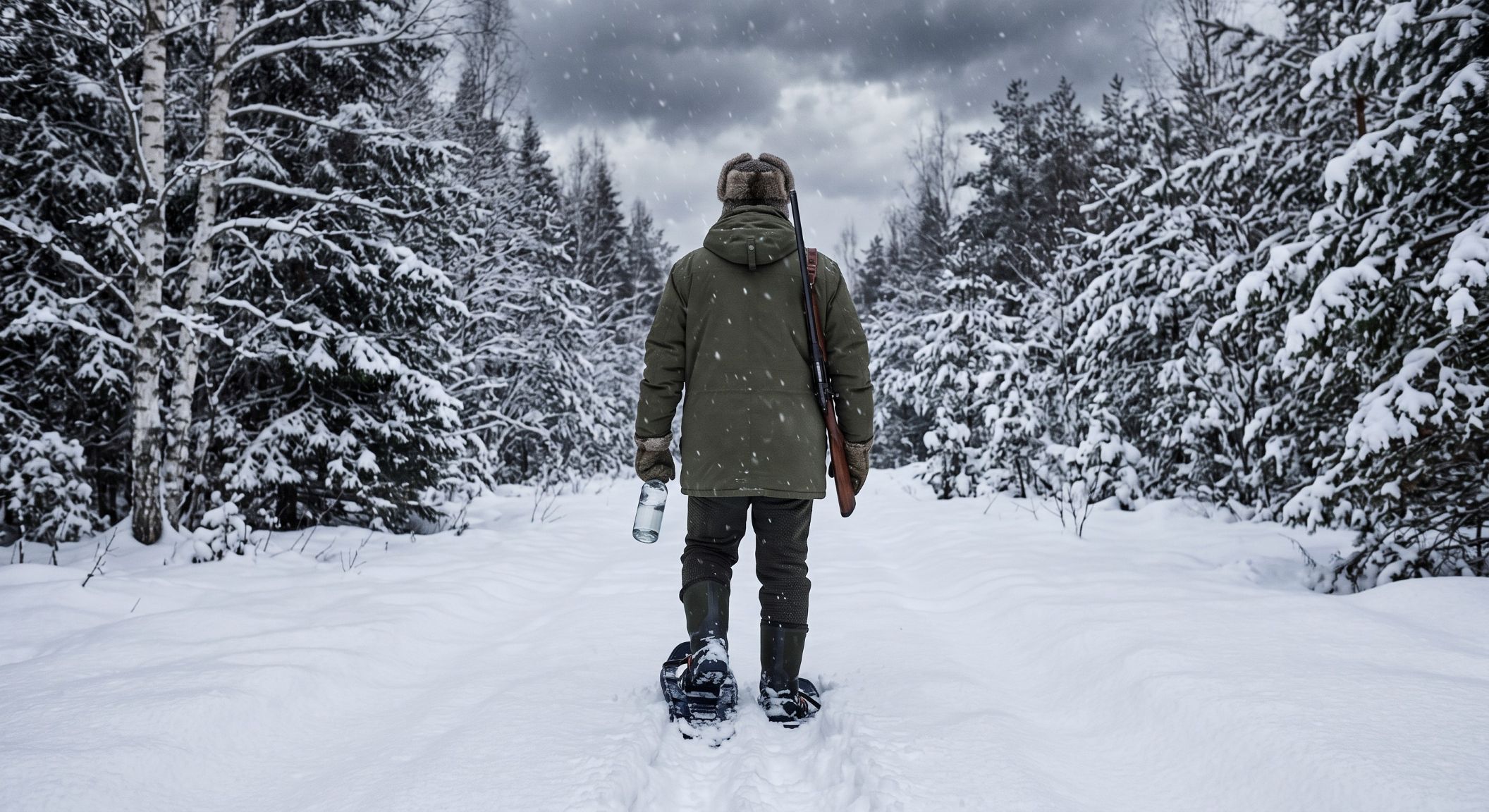
After finishing this book, I think I’ll retire to the woods with a shotgun and a bit of vodka:
But seriously, it’s time for a cheerier read.
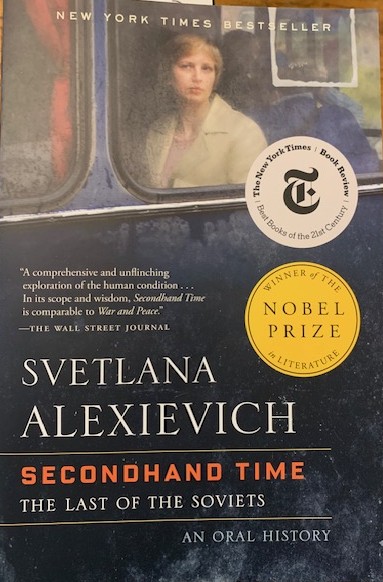
Title: Secondhand Time: The Last of the Soviets: An Oral History
Author: Svetlana Alexievich
First published: 2012
Length: nonfiction book


That sounds like a very interesting book but depressing like you say. The Soviet Union was indeed a sad society. I was there in 1980 (when I was a teenager) and everything felt sad and gray. They spent all their money on the military and nothing on people, and you had to watch carefully what you said.
A friend of mine grew up in Communist Czechoslovakia and had pretty much the same things to say about the USSR, which she visited as a student. She spoke and read Russian. She remembered the Prague Spring and never had a good word to say about Communism.
Yes those are important stories to remember.
I just ordered this book through inter-library loan. I had a couple of Russian history classes in college (both pre-revolution), so I’m very interested to read this. Thanks for the reviews! I love reading them.
Thanks for your kind words! I hope you like the book. I’ll be interested in hearing what you think of it. And I’ll keep some extra vodka on hand in case you might feel a need for some.
It would be fun to have a vodka with you!