Review of “The Monolith Monsters” (1957)


Saturday Pizza and Bad Movie Night:

Plot:

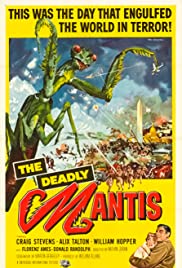
After a meteorite shatters unnoticed across a remote spot in the desert, geologist Ben Gilbert (Phil Harvey) comes across an odd rock in his travels in the desert and brings it back to the office. He can’t figure out what it is. He turns in for the night, leaving a window open. The wind kicks up. While he’s snoozing, the wind blows a beaker of distilled water onto the mystery rock. It starts sizzling.

Ben’s partner, Dave Williams (Grant Miller), returns the next days, to find the lab a wreck, littered with odd black rock. Where’s Ben? Dave finally finds him—in his pajamas, turned to stone.

Thoughts:

There’s a lot of hooey in this film, but what makes it different is there’s no evil intent in the danger. The rocks are just doing their rock thing. They’re not out to conquer the universe or destroy mankind or capitalism. Another nice aspect is the viewer is in what makes the rocks tick before the characters are. The viewers have seen what happens when water hits them. When little Ginny Simpson (Linda Sheley) sets her rock, picked up on a field trip, in a tub full of water outside her family farmhouse, the viewer knows the bad stuff is going to hit the fan. Dave and local newspaperman Martin Cochrane (Les Tremayne) are still pondering the rocks. Over their shoulders, a storm breaks. The viewer can scream, “All those rocks in the desert! Dudes! Get a move on!”

Again, the solution may be, well, hooey, but at least it was logically consistent. It’s crystal growth gone wild.

According to IMDB, this film borrowed footage from 1938’s Born to be Wild and 1953’s It Came from Outer Space.

Viewed via February 29, 2020 via Svengoolie.


Cast:

Grant Williams … Dave Miller
Lola Albright … Cathy Barrett
Les Tremayne … Martin Cochrane
Trevor Bardette … Prof. Arthur Flanders
Phil Harvey … Ben Gilbert
William Flaherty … Police Chief Dan Corey

Directed by John Sherwood

Writing Credits Norman Jolley …(screenplay) and Robert M. Fresco …(screenplay)
Jack Arnold …(story) and Robert M. Fresco …(story)

Title: The Monolith Monsters
1957

Review of “Fresh Air and Ice Cream” by Rick McQuiston

Plot:

Bobby has spent so much time in front of the television playing video games, his face has grown gaunt. He finally talked his mom into buying him the game Extinguish the Light.

A brilliant flash of light nearly blinds him. It’s only his mom, pulling back the curtain. She tells him she wants him to get some fresh air.

“It’s a beautiful day,” she says. “Look. There’s other kids, and an ice cream truck.” [sic]

Bobby drops the controller. His mom further entices him off the couch with a five-dollar bill for a trip to the ice cream truck. Once his knees acquiesce, he gets up and flies out the front door, but stops at the porch. He sees the kids in line at the ice cream truck, but something strikes him as off. He can’t put his finger on it.

Thoughts:

Yeah, lazy, greedy Bobby is screwed. The reader knows from the first paragraph, his fate is sealed. These straight horror stories are modern-day morality tales, comforting us with assurances that we won’t suffer the same bad end ‘cause we’re not like that jerk who got eaten or fried or fell into a black hole or fill-in-the-blank. We’re not like lazy, greedy Bobby, gaunt of face, whose knees threaten to buckle when we try to get off the couch. We don’t abandon our favorite pastime in for of a bit of money. (…or maybe there’s a bit of Bobby in all of us?)

But that’s not all there is to this story. If the reader is paying attention, there is a lesson for others, as well.

I’d like to read just once where even the most deserving rotten human scoundrel gave one of these monsters indigestion or made it so loaded/flatulent he had to skip the next monster convention.

Bio:

According to his blurb, author Rick McQuiston is a father of two, and loves anything horror-related. He’s had over 400 publications, including five novels, ten anthologies, one book of novellas, and edited an anthology of Michigan authors.

The story can be read here.

Title: Fresh Air and Ice Cream
Author: Rick McQuiston
First published: Theme of Absence, February 28, 2020

Review of YouTube Short “Ronnie and the Pursuit of the Elusive Bliss”

Plot:

This amusing and enjoyable short depicts the fireworks that erupt when the Ronderos’ son Jerry (Anthony James Hernandez) comes home from college for a visit. Mom Veronica (“Ronnie”), played by Adria K. Woomer-Hernandez, lays down the law to her husband Guillermo (Juan Carlos Hernandez): no talking, not even whispering, about politics.

…Which means, of course, there will be a knock-down, drag-out fight, and among this Cuban-American family, that requires be a rehashing of the Bay of Pigs Invasion. Guille describes how the “cabrón Kennedy” blew the whole thing. Jerry isn’t so sure Kennedy’s actions made much difference, that it was doomed from the beginning.

Thoughts:

However, this film examination is not facile. These people love each other. Despite their differences, they still care for one another. Jerry brings home treats for his folks, items that delight them. He’s greeted with, “How’s school? Are you eating enough?”

It’s fun to watch the family members interact with each other. There’s no malice. The different characters become angry and annoyed at each other. In less capable hands, their portrayals could have been cardboard clowns. However, even when they’re at their most ridiculous, these characters remain human beings with depth.

The opening and closing scenes are shot over Ray Charles’ “America the Beautiful.” The viewer will also hear the rousing Carmen Miranda song “Mama, yo Quiero” and the romantic “Cuando Sali de Cuba,” a song that speaks of the sadness of leaving home forever. These choices reflect the mood of the piece: humor, fun, and a little sadness as we try to get on with one another.

The film can be watched  here.

The film  lasts about twenty-two minutes.

Title: Ronnie and the Pursuit of the Elusive Bliss
Starring:
Adria K. Woomer-Hernandez as Veronica “Ronnie” Rondero
Juan Carlos Hernandez as Guillermo “Guille” Rondero:
Anthony James Hernandez as Jerry Rondero

Directed and Edited by: Juan Carlos Hernandez
Produced by: Adria K. Woomer-Hernandez
Sound by: Adria K. Woomer-Hernandez
Written by: Alex Diaz-Granados, based on his original screen concept, Happy Days Are Here Again

Review of “Dreams Do Come True” by Peggy Gerber

Plot:

Sofia was painfully shy as a child. They called her condition selective mutism. She tells the reader that when someone would come up to her and her mom when they were out walking, she’d dart behind her mom’s legs. Her dolls and stuffed toys were her friends, but she wasn’t lonely. They had lovely tea parties, played princess, and planned her wedding to Prince Charming.

Nevertheless, the school principal threatened expulsion if her parents didn’t take her to a therapist.

“Thank God for that, because therapy changed my life,” Sofia tells the reader.

Thoughts:

The happily ever after story can’t be all that is sound like, of course. This is handled so deftly that even though the reader knows it’s coming, it’s hard to see. Only in re-reading can the subtle clues noticed.

I don’t know whether the author intended this or not, but this brief tale speaks of the difficulty of bringing fairy tale romances to real life. A friend of mine once asked, “Why can’t it ever be like it is in the books?” This story, I think, reflects that, at least in part.

I liked this sad little tale.

Bio:

According to her blurb, author Peggy Gerber is a poet and science fiction writer from New Jersey. She is also a co-founder of Champagne Writers.

The story can be read here.

Title: “Dreams Do Come True”
Author: Peggy Gerber
First published: Daily Science Fiction, February 24, 2020

Review of “The Red Expansion” by Matt Nagel

Plot:

LM081018 is a non-sentient robot tasked with highway maintenance, a job it has been performing faithfully for millennia. This morning, as the growing sun rises over the horizon and recharges its batteries, LM081018’s temperature gauge registers 75 degrees Celsius. The robot once had rain gages, but since all earth’s water has long boiled away, the question of rain is moot.

Thoughts:

The end is not a surprise, but author Matt Nagel provides a nice portrait of a machine doing its job without memory of things being different. It has no feelings, no hopes, no dreams. It simply has a job to do, whether that job has any relevance.

I liked this little story, though one could hardly call it cheery.

Bio:

According to his blurb, Matt Nagel says he writes stories influenced by his passion for space. He lives in Stroudsburg, PA, with his wife and the one-year-old son. His advice for new writers is to keep it simple and to write about something you know for your own pleasure.

The story can be read here.

Title: The Red Expansion
Author: Matt Nagel
First published: Theme of Absence, February 21, 2020

Review of “The Hole” by K. N. George

Plot:

James has been having recurring dreams involving six-eyed monsters and his death. These freak him out. He doesn’t know why. Dreams can’t kill, and six-eyed monsters don’t exist. He attributes the nightmares and their effect on him to childhood memories of bullies beating him nearly to death.

He tells himself he needs to see a shrink. He wishes he had someone to talk to and reflects on the recent losses his short fuse has caused him. The kid upstairs likes to practice his electric guitar at full volume. James protested the other day by banging a broom against the ceiling. Now there’s a hole in the ceiling.

“It hit him that,” the reader is told, “at thirty-three, he’d become the crabby old man he used to loath[e] when he was younger.”

(Been there, brother. Yeah, and get off my lawn, you goddamn kids.) But James resolves to buy earplugs. It’s the adult thing to do.

And then he hears scratches in the ceiling. Oh, great. Now cockroaches are moving into the apartment.

Thoughts:

James is a jerk. He didn’t deserve the beating he got when he was a kid. He probably deserved his dearly beloved leaving him and losing his job. Just the same, when the boom is lowered (you weren’t expecting a happy ending, now, were you?) the reader can’t help wondering what the poor sap did to deserve his fate.

Add to this that the ending is not a surprise, and this story is something of a disappointment. It gets the horror-story formula right, but there is, at least for me, nothing beyond that. This is not a bad story by any stretch. It’s just been told so many times before.

Bio:

According to his author’s blub, K. N. George attended the Art Institute of Washington for Animation, but found his creative writing classes to be the most rewarding part of the experience. He lives in Northern Virginia, where he enjoys his hobbies of writing, reading, drawing, and drumming. He was an award-winning stage actor as a child.

The story can be read here.

Title: ”The Hole”
Author: K. N. George
First published: Theme of Absence, February 14, 2020

Review of “Some Form of Contact” by Marie Vibbert

Plot:

Jody climbs up to the apartment roof, followed by Mick, the hottest guy in the apartment complex. Instead of paying attention to her, he sits down on an air conditioner housing and pulls out his phone.

“This is the perfect place to watch invasion footage uninterrupted,” he tells her.

The alien ships have appeared over major industrial and population centers, ignoring places like Dayton, Ohio, where Jody and Mick live. Jody is terrified and well, aroused.

“What if we’re all about to die?” she asks Mick.

In the meantime, Jai and Mai swim along the corridors of Exploratory Ship Number Seven. Jai had talked Mai into taking night watch with em, but all Mai wanted to do was watch the feeds of the humans.

“Look how they gather under the ships. It’s just like in that entertainment where the mind-controlled mutants attack.”

Thoughts:

There are no surprises in the ending, but the story is cute. Author Marie Vibbert uses novel pronouns for the aliens as well as novel words describing the alien bodies. This is an entertaining use of language and shows a bit of thought. It also leaves some room for the imagination for the reader.

While there’s nothing deep here, it is a fun little read. I enjoyed it.

Bio:

According to her author’s blurb, Marie Vibbert’s work had appeared in Analog, Asimov’s, and F&SF. (Damn, girl! Three biggies!) Her day job is a software developer in Cleveland.

The story can be read here.

Title: Some Form of Contact
Author: Marie Vibbert
First published: Daily Science Fiction, February 10, 2020

Review of “The Death of Bees” by Avra Margariti

Plot:

The unnamed narrator has an online girlfriend, Anastasia, who is writing an essay about the population depletion of bees. When the narrator looks out her (?) bedroom window, she sees fuzzy insects landing on the lilacs.

Homeschooled, she later asks her parents why the bees on their property seem to be thriving. This question makes her computer-programmer parents nervous and provokes warnings to stay away from the bees. She could be stung—or—or what if she’s allergic?

This, in turn, provokes a question to Anastasia: How do you know when a thing’s real?

Apparently of a practical bent, Anastasia replies: You investigate, silly. Her practicality doesn’t prevent her from adding a string of throbbing heart emoji.

Thoughts:

I’ve called the narrator “she,” but there really is no indication of her gender. Another reader might see a male here, I suppose. It would be perhaps the first logical conclusion after seeing the narrator has a girlfriend. I just read her as female, but I obviously don’t know the intent of the author.

The ending is visible from a mile away. Just the same, watching the narrator test the limits of her world is engaging. Author Avra Margariti works in lightness via the eye-rolling teenager fed up with her hand-wringing parents to make the reader smile and to mask something perhaps more sinister.

While not among my favorites, this short, enchanting read has charms. I enjoyed it.

Bio:

According to her blurb, author Avra Margariti is a queer Social Work undergrad living in Athens, Greece. She enjoys storytelling in all its forms. Her work has appeared or is forthcoming in Flash Fiction Online, The Forge Literary, SmokeLong Quarterly, The Journal of Compressed Creative Arts, and Argot Magazine, among others. Margariti won the 2019 Bacopa Literary Review prize for fiction. Her Twitter handle is @avramargariti.

The story can be read here.

Title: “The Death of Bees”
Author: Avra Margariti
First published: Daily Science Fiction, January 27, 2020

Review of “The Unicorn Keeper” by Mary E. Lowd

There is no plot in this short work, only a portrait of a put-upon unicorn keeper. Amilioona, the unicorn, has dainty gleaming, tufted—perfect— hooves which gleam “the same sparkling shade of white as a hillside of snow in the sun.” Those dainty hooves manage to kick the slop bucket over regardless of where the keeper leaves it. They also kick up fresh hay, making the keeper sneeze.

The unicorn’s trespasses go from inconveniences that could view with indulgence to more serious things. Is Amilioona conscious of the pain she inflicts? Or, like a spoiled toddler, does she simply not understand?

Amilioona earns her keep, performing in a carnival and visiting children’s birthday parties. However, she insists on being fed by hand. She won’t eat three-leaf clovers. They taste different from the four-leaf clovers she demands. If the keeper tries to set limits, Amilioona stops eating and loses her silver-as-moonlight ethereal glow. Everyone blames the keeper and cries for her fix to the unicorn.

Thoughts:

It’s hard not to see this as the quintessential abusive relationship. Everyone is enchanted with the unicorn who performs ludicrously impossible acts in the carnival. A trapeze artist walks the unicorn home and says goodbye to the unicorn while ignoring the human because after all, the human is only the unicorn’s keeper.

The keeper sees the situation as her fault. Amilioona is a difficult eater because she babied her when she found her as a fawn. The bandages she wears when the unicorn cuts her with her horn are the result of things the keeper has done. (Again, is this deliberate? Out of negligence? Or does Amilioona simply not know better?)

This nicely crafted little piece leaves the reader unsettled.

Bio:

According to her blurb, author Mary E. Lowd lives in Oregon with her husband, two children, a bevy of cats and dogs, and the occasional fish. Her fiction has won an Ursa Major Award, two Leo Literary Awards, and two Cóyotl Awards. She is also the editor and founder of the furry e-zine Zooscape.

The story can be read here.

Title: “The Unicorn Keeper”
Author: Mary E. Lowd
First published: Theme of Absence, January 17, 2020

Review of “Kill Switch” by A. P. Howell

This is more of an essay. There isn’t a plot as such.

The reader is told that what is referred to as a “kill switch” is more complicated than a single switch. What is referred to as a gene is more complicated than a single gene.

“That’s the history of genetics right there. Applying chosen labels to half-understood phenomena of infinite biological and social complexity.”

The narrator is a working technician. Just the same, he (or she?) says if she’d been born a generation earlier, he’s been regarded as a wizard. Nevertheless, he’s happy with no more reward for his tweak here and snip there than a regular paycheck.

Thoughts:

The message of the essay is obvious from the opening paragraph when the narrator makes a point of identifying “morons.” This appears to allude to the infamous 1927 Supreme Court decision, Buck v. Bell, in which Justice Oliver Wendell Holmes wrote denying that the 14th Amendment protected people from forced sterilization—if they didn’t measure up. Regarding plaintiff Carrie Buck and her family, he rather uncharitably added, “Three generations of morons are enough.”

This decision lent justification to the eugenics movement in the United States. The movement lost steam after the horror of the Holocaust and Nazism was revealed, but the recent resurgence in white supremacy shows how often a bad penny shows up.

There are other allusions, of course. Author A. P. Howell has done her homework.

I would be remiss if I didn’t add, despite its harrowing warning, the writing itself tends to be dull. This may be intentional, underlining another point the author wished to make, but it can strike the reader like reading the same sentences several time.

I liked this sad little piece, but I would not read it a second time.

Bio:

In her author’s blub, author A. P. Howell has held various jobs, from ice cream scooper to webmaster. Her work has appeared in Corvid Queen and the anthology XVIII.

The story can be read here.
Title: “Kill Switch”
Author: A. P. Howell
First published: Daily Science Fiction, January 20, 2020